
In industrial environments where safety, precision, and efficiency are critical, the quality of the control interface plays an important role. One technology that is gaining increasing traction is haptic feedback, also known as tactile feedback.
What is haptic feedback?
Anyone who wants to order a joystick from us is guided throughout the selection process by the experts at Althen Sensors & Controls. Even when customers already know which version they need, for example when replacing an existing device, we specifically ask for technical specifications and advise on the best possible joystick from our extensive range.
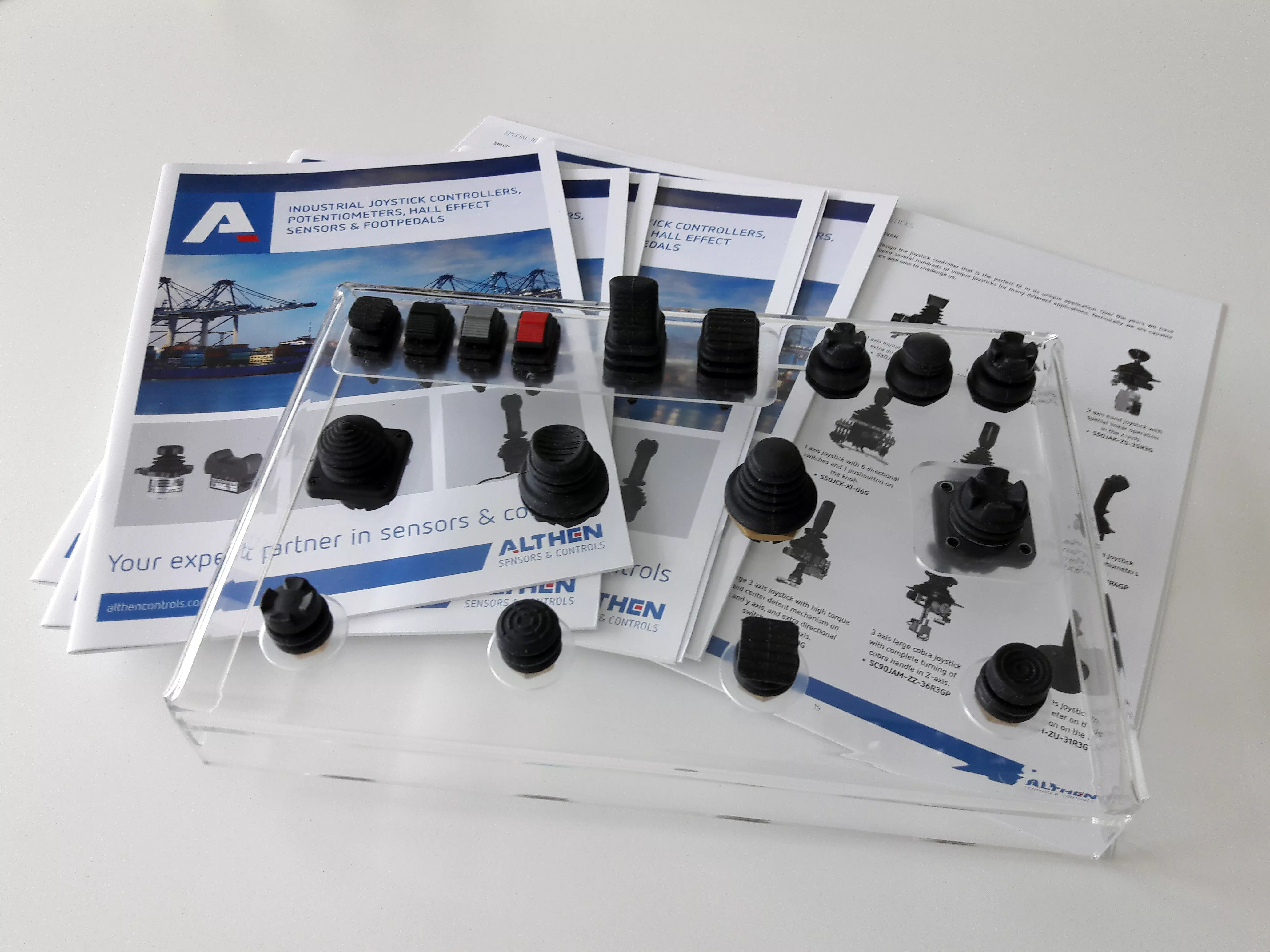
An important part of this process is that interested parties always receive sample joysticks. This allows them to test suitability for their application in real-world conditions. Our Head of Product Management, Stefan Kunisch, explains what really matters:
“Many joysticks look similar, but there can be a big difference once you hold them in your hand. It all comes down to the small details of operation. How does the button feel? Do I slip or do I have a firm grip? Is the joystick ergonomic enough for prolonged use? And does the joystick movement match the actual movement of the large machine, creating a true one-to-one response?”
Application in industrial control
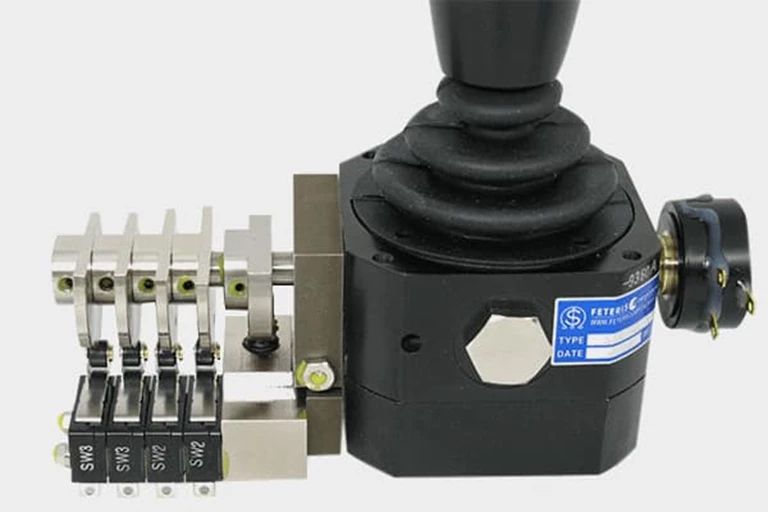
In applications such as crane control, agricultural machinery, vehicles, or process automation, haptic feedback makes operation more intuitive. The operator can literally feel what the machine is doing and how it responds. This enables faster and more precise actions. It increases productivity and improves safety at the same time.
Benefits of tactile feedback
- Faster response: Tactile signals reduce the time between perception and action.
- Improved situational awareness: The operator immediately notices changes, even without looking at a screen.
- Reduced strain: Tactile feedback lowers mental workload by engaging multiple senses at the same time.
- Higher precision: Especially in sensitive applications, tactile resistance provides greater control.
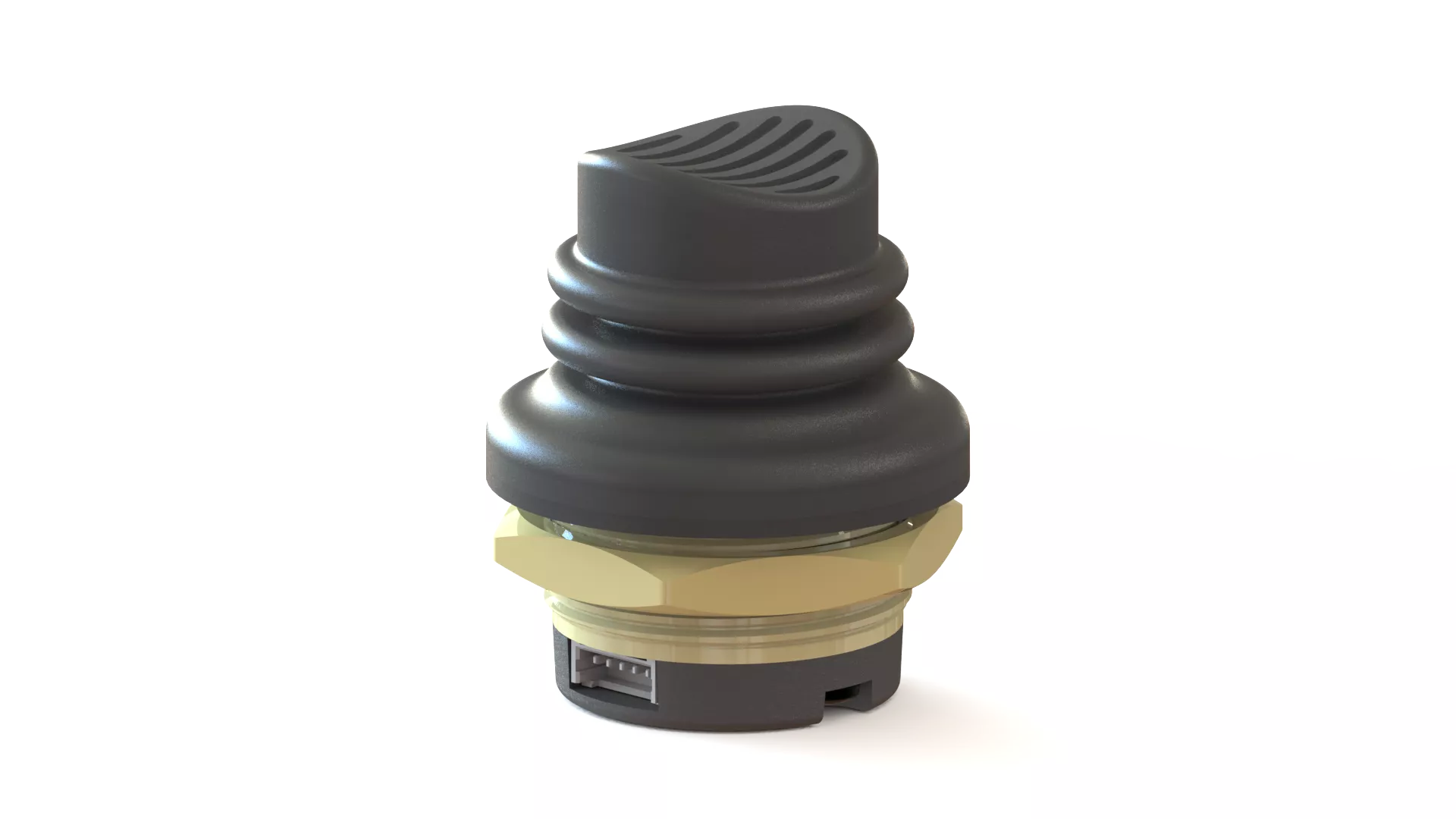
Two-axis mini joystick for surveying drones
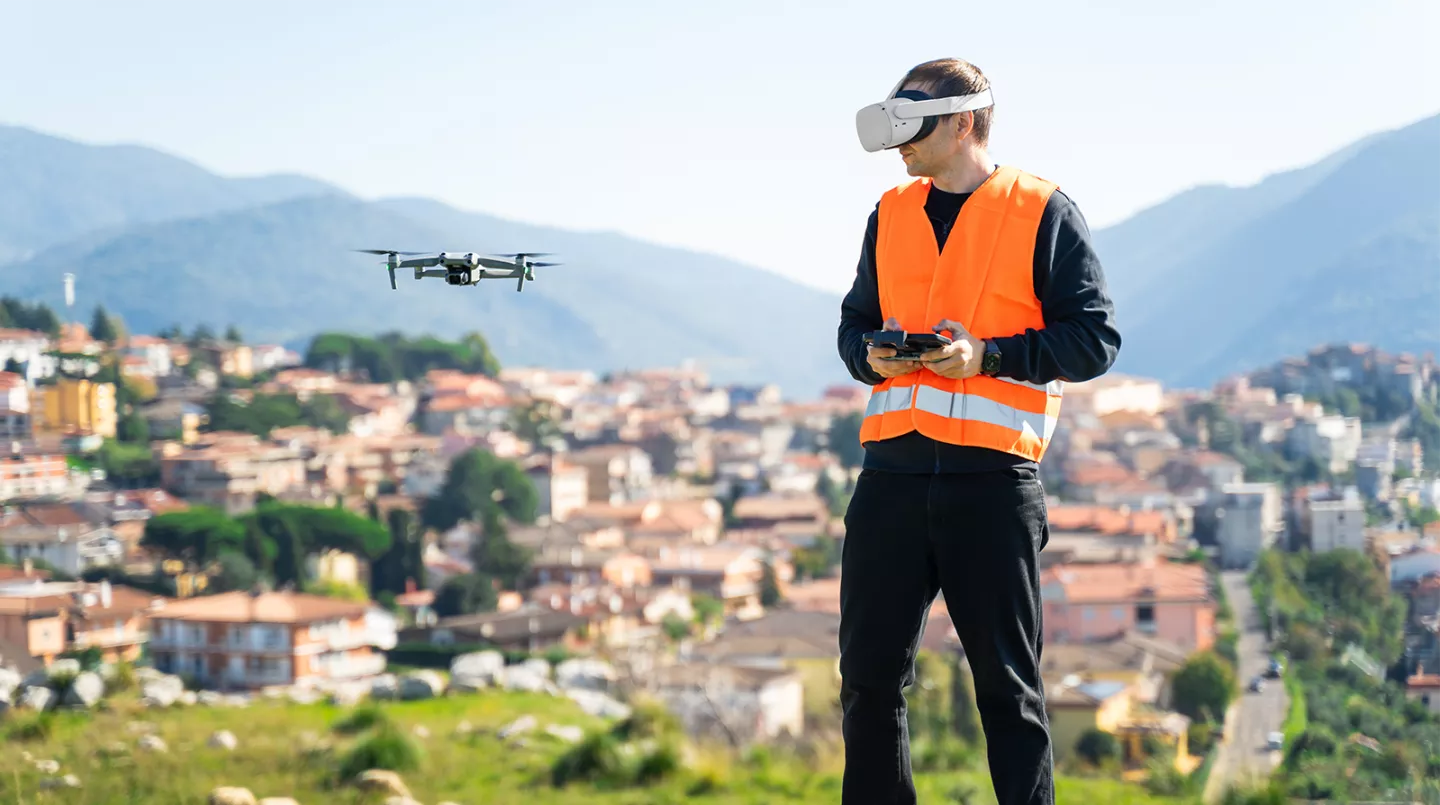
In the end, a sample also simplifies the design process, as shown in a project for a customer that manufactures drones for land surveying. A camera with a zoom function had to be integrated underneath the drone. All functions, from the actual drone control to the camera zoom, had to be operated via a single remote control, which was challenging due to the limited available space. Several prototypes were used to evaluate the available installation space. Ultimately, a bi-axial mini joystick was integrated, including two additional zoom switches for zooming in and out.
Many joysticks look similar, but there can be a significant difference once you hold them in your hand. It all comes down to the small details of operation. How does the button feel? Do you slip, or do you have a firm grip? Is the joystick ergonomic enough for prolonged use? And does the movement of the joystick match the actual movement of the large machine, creating a true one-to-one response?

Advanced technology at Althen
Althen supplies industrial joysticks equipped with advanced haptic feedback mechanisms. These include programmable resistance, vibration feedback, and custom configurable feedback profiles. Our solutions are used in sectors where reliability and operating comfort are critical, ranging from offshore and defense to agriculture and automation.

Do you have any questions about selecting industrial joysticks?
We are happy to help you