

High precision for research and development
Particularly in the context of R&D applications, high precision in measurement technology is essential, as it enables the exact validation of theoretical models. Furthermore, it ensures the global comparability of results and thus forms the fundamental basis for the scientific reproducibility of experiments.
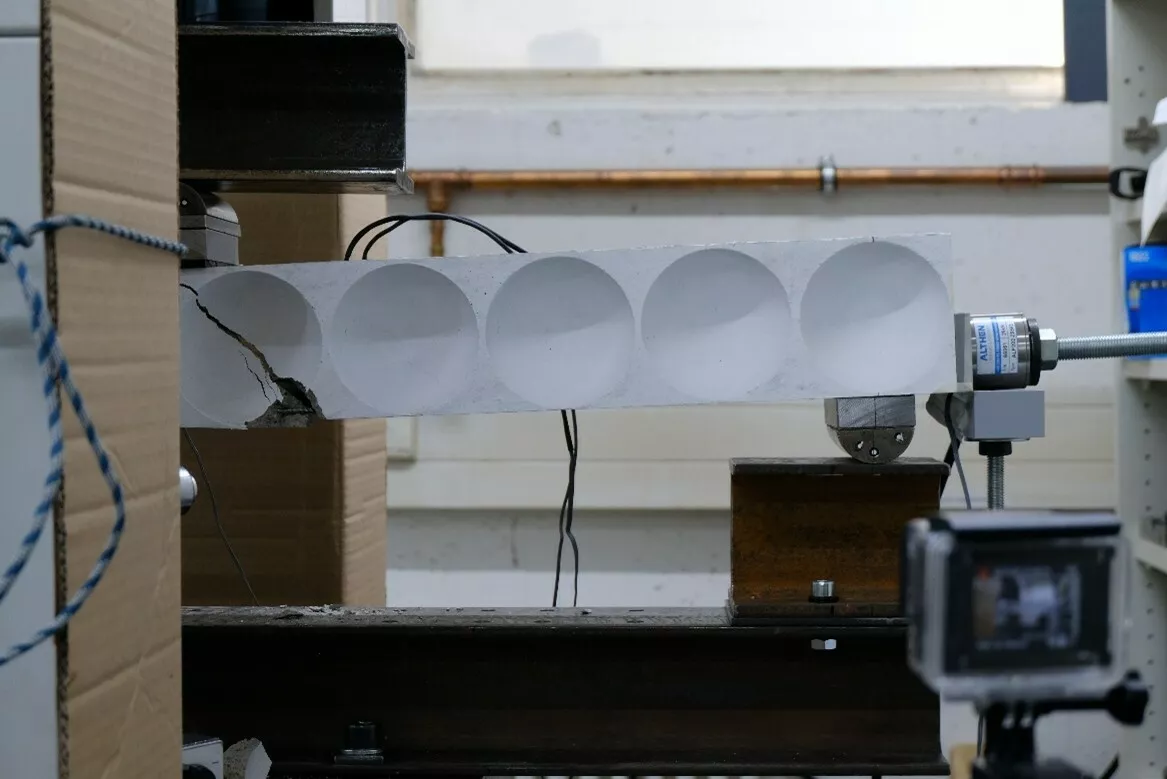
Importance of prestressing force measurement
In prestressed concrete construction, the principle of prestressing is used to compensate for the low tensile strength of concrete while exploiting its high compressive strength. To this end, permanent compressive stress is applied using special tendons. This increases the performance of a component and enables large spans with slim structures.
The precise measurement of the prestressing force is of central importance here. This is the only way to ensure that the compensation of tensile stresses defined in the design process is actually achieved and that there is no critical overload of either the tendon or the concrete.
-
Customised designALF 202 with 25 kN and 16.3 mm through hole – precisely tailored to the test setup.
-
Precise monitoringReliable measurement of prestressing force during the tensioning process and bending test.
-
Compact integrationDirect integration into the tensioning member with limited installation space.
-
Added value for researchReliable data for new design and dimensioning approaches.
Requirements and objectives
- Simple integration into the planned test setup
- High precision in monitoring/reading the applied prestressing forces
- Reproducible measurement results
- Straightforward integration of the measurement technology into the existing infrastructure
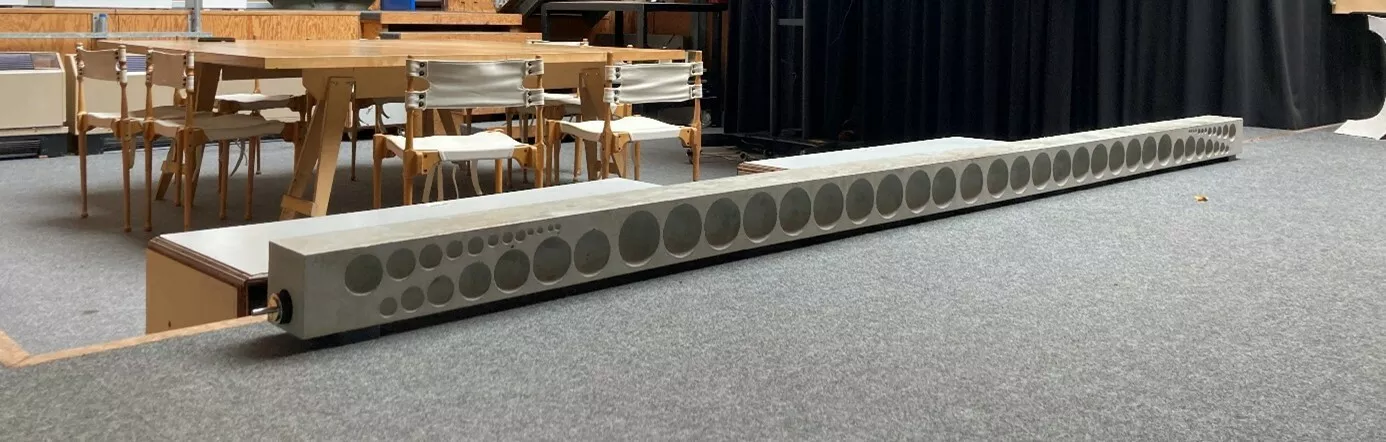
Althen’s measurement solution
To precisely measure the prestressing forces during the tensioning process as well as during the 4-point bending test, a customized version of the ALF202 load cell with a measuring range of 25 kN was provided. This special version featured an adapted through-bore to accurately guide the single-sided anchoring unit of the tendon, ensuring highly precise force introduction and optimal load distribution on the load cell’s compression ring.
For data acquisition, the load cell was integrated into the existing infrastructure of the institute’s testing laboratory with minimal effort. The precise measurement of the prestressing force is of central importance. Only in this way can it be ensured that the compensation of tensile stresses defined during the design process is actually achieved, while also preventing any critical overloading of either the tendon or the concrete.


Tell us about your project!
We would be happy to assist you in selecting the right sensor for your research project!