
The track monitoring challenge
Dedicated measurement trains require separate planning and usually inspect each section of track at fixed intervals. Changes that develop between these inspections may therefore remain unnoticed for some time.
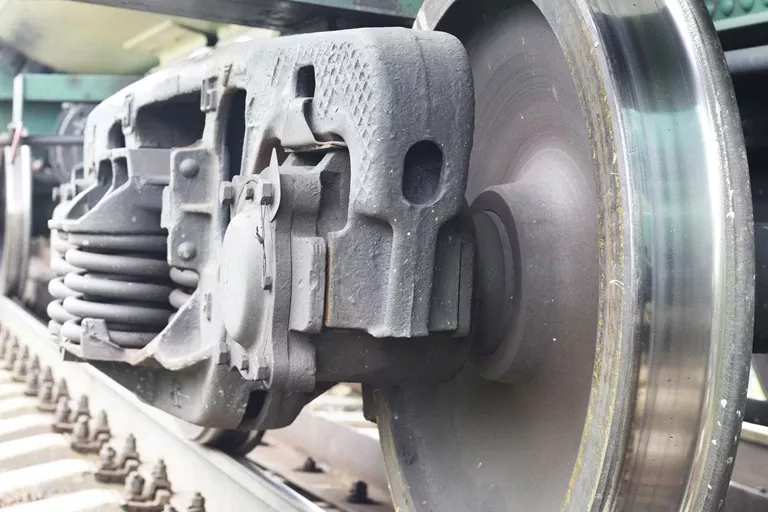
The new measurement concept required sensors that could operate continuously on passenger trains. They had to withstand vibration, shock, temperature changes and electromagnetic interference while providing stable measurements over long periods.
Compact dimensions and robust construction were also important because the sensors are installed on the train bogies.
Our sensor solution
Althen supplied triaxial ASC RAIL accelerometers and triaxial ASC RAIL gyroscopes.
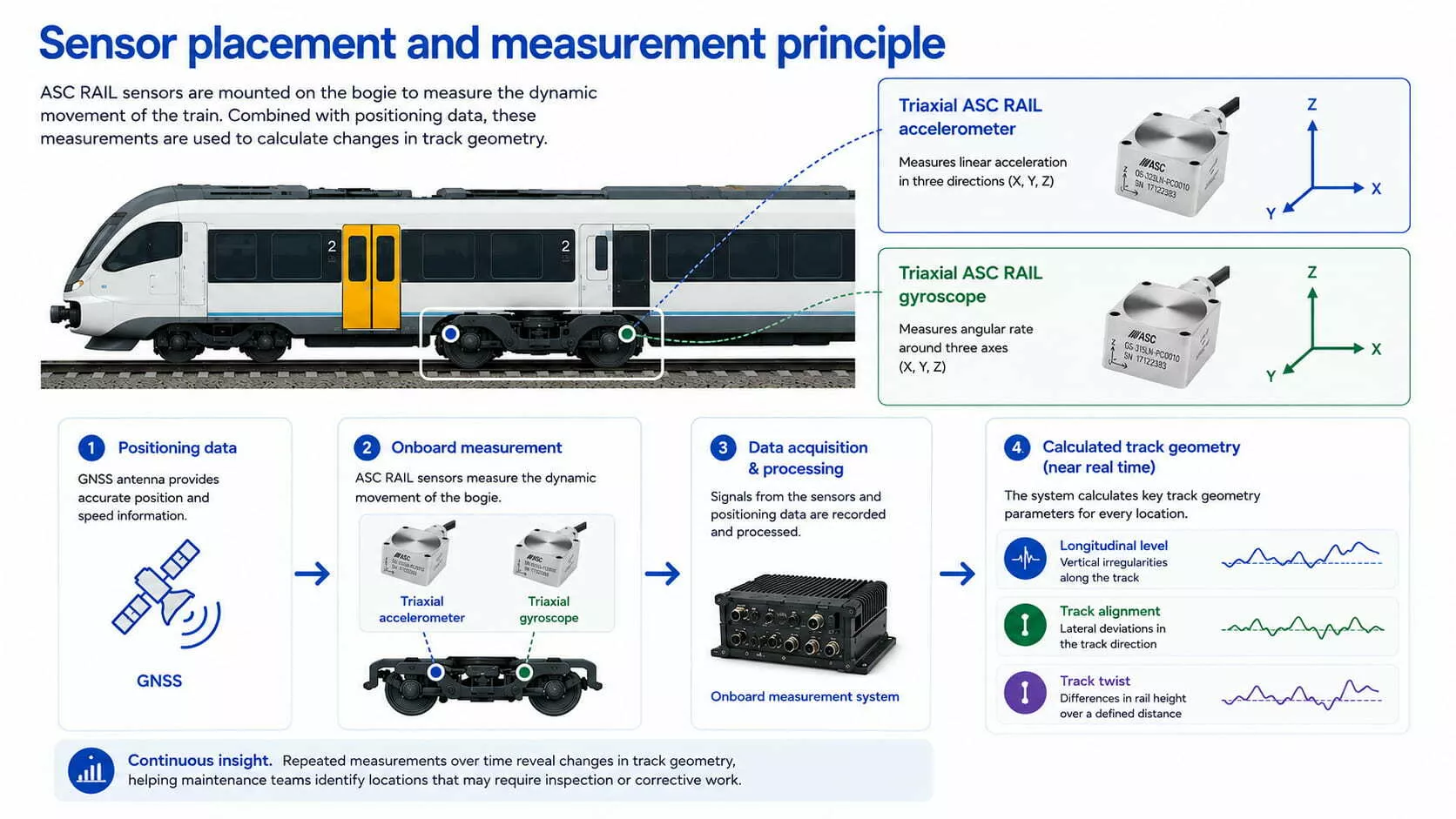
The accelerometers measure linear movement in three directions. The gyroscopes measure rotational movement around three axes. Together, they capture the dynamic behaviour of the bogie as the train travels across the network.
The sensors are integrated into an onboard measurement system that also uses positioning data. This connects each measurement to a specific location on the railway.
What track geometry data reveals
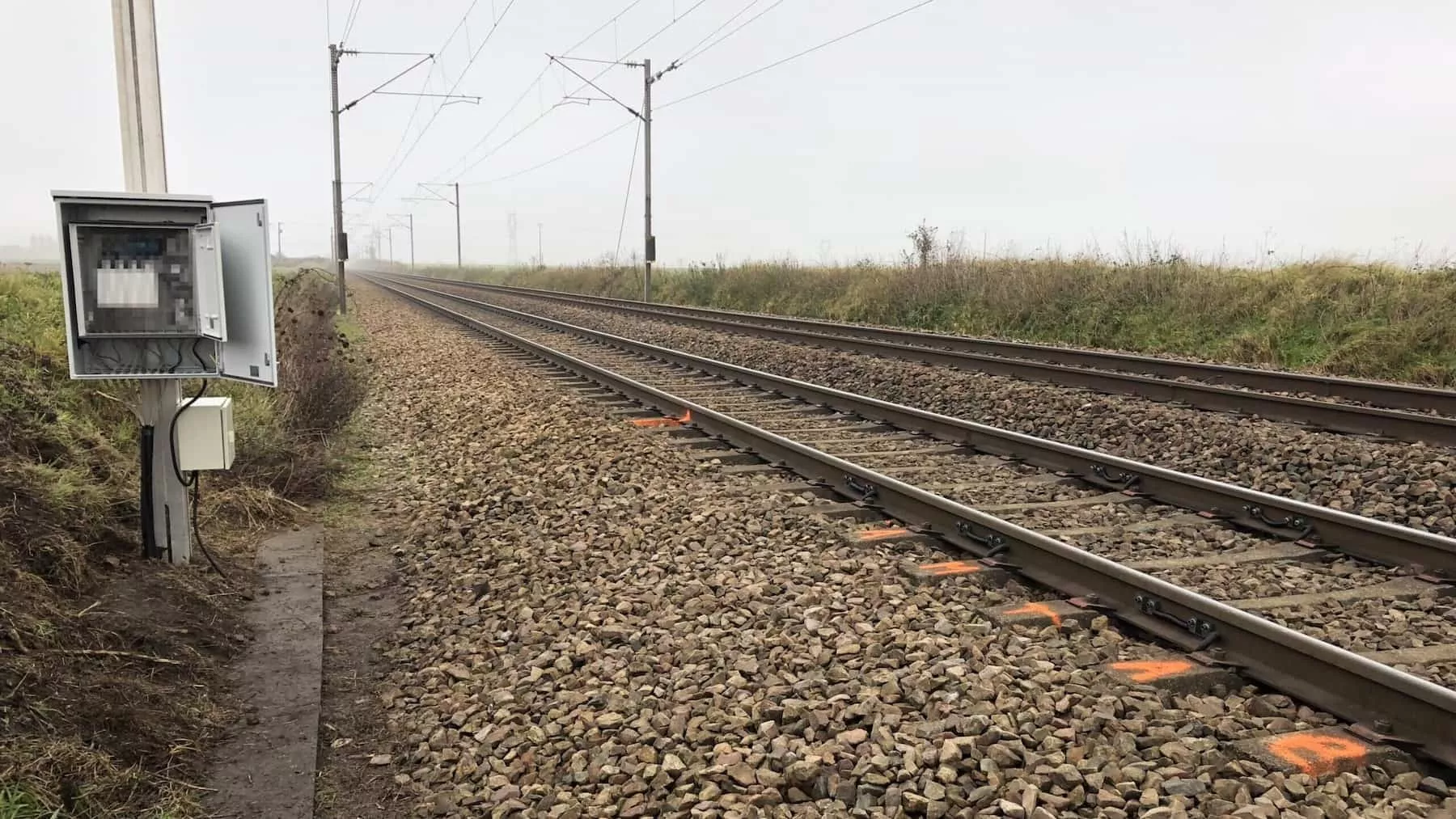
The measurement system combines acceleration, angular rate and positioning data to evaluate the geometry of the track.
This includes:
- Longitudinal level: vertical irregularities along the track
- Track alignment: lateral deviations in the direction of the track
- Track twist: differences in rail height over a defined distance
Repeated measurements make it possible to identify sections where track geometry is changing or gradually moving outside the desired condition.
The results can indicate issues such as uneven settlement, changes in track position and local deformation. This helps maintenance teams determine where further inspection or corrective work may be needed.
The system is intended for monitoring track geometry. It does not directly inspect rails, sleepers or fastening components for material damage. ASC accelerometers and gyroscopes are used in tailored measurement systems to calculate changes in longitudinal level, track alignment and track twist.
Designed for railway environments
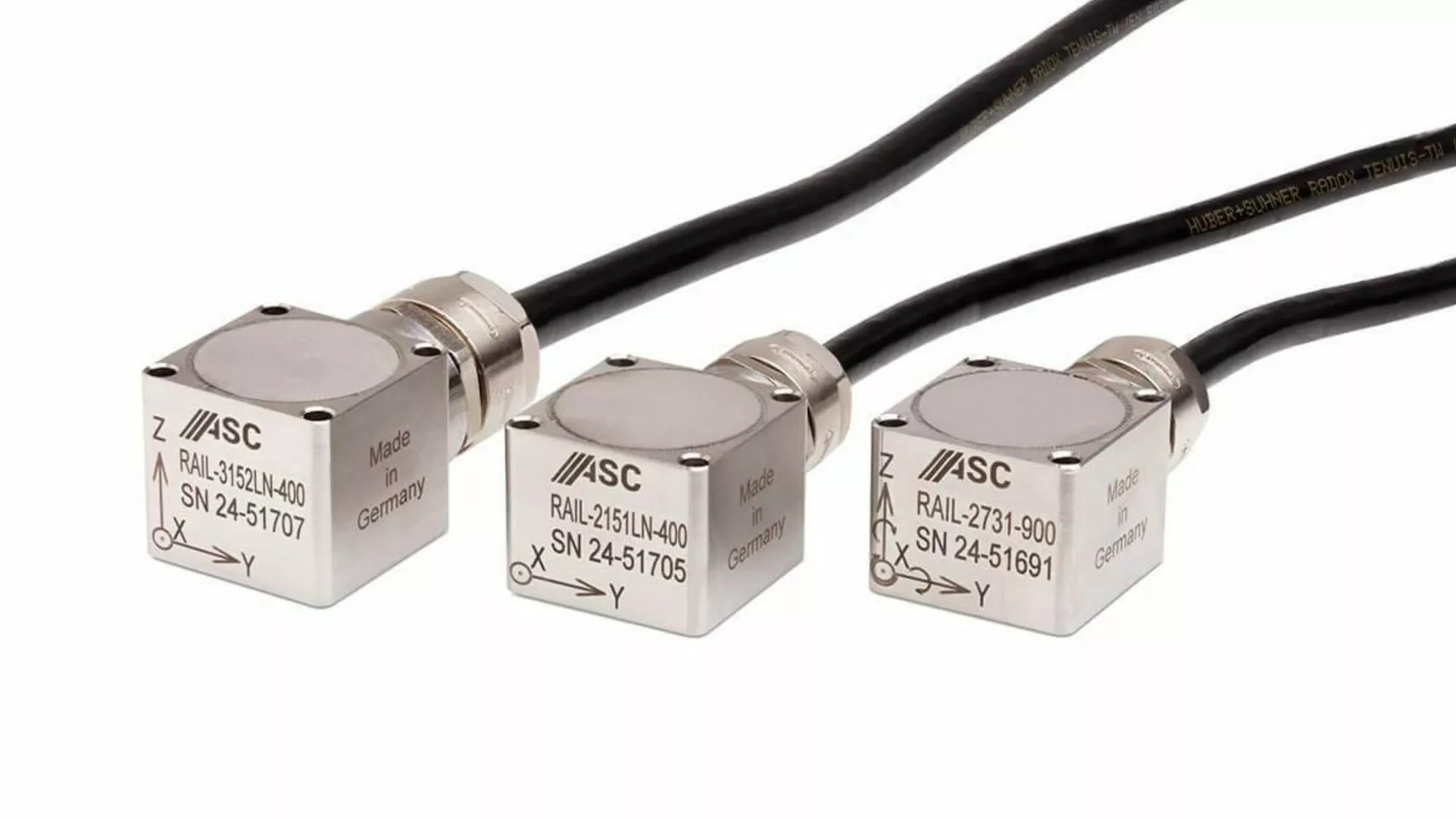
The selected ASC RAIL sensors are designed for use on rolling stock and meet applicable requirements of EN 50155.
They feature robust stainless steel housings with IP68 protection, together with railway suitable cables and cable glands. The sensor series has also been tested for vibration, shock, temperature resistance and electromagnetic compatibility.
The triaxial accelerometers use capacitive MEMS technology and can measure both static and dynamic acceleration. The triaxial gyroscopes use MEMS vibrating ring technology and are designed to remain stable under external vibration and impact.
More frequent insight during daily operations
With multiple passenger trains measuring the same routes during normal service, the infrastructure operator gains a more frequent and repeatable view of developing track geometry changes.
The same track sections can be measured by different trains and at different times. This creates redundancy and makes it possible to compare results over longer periods.
The project documentation identifies near real time data, redundancy and cost savings as key benefits. It also indicates that five equipped trains can generate approximately twenty hours of measurement data per day.
Supporting predictive maintenance
More frequent measurements help the operator identify changes before they develop into more serious track conditions.
Maintenance teams can use the data to:
- identify changes in track geometry earlier;
- monitor how deviations develop over time;
- prioritise inspections and maintenance activities;
- intervene before a condition causes disruption;
- improve maintenance planning and network availability.
This supports a transition from periodic inspection towards condition based and predictive maintenance. Continuous monitoring can contribute to fewer disruptions and higher railway availability.
A scalable monitoring platform
The measurement concept was developed as a scalable platform. Additional trains, sensor types and information products can be added as the programme expands.
Using passenger trains increases measurement coverage without requiring a dedicated measurement train for every inspection. The long term objective is broader network coverage through multiple trains and different train types.
The real value is not simply collecting more data, but gaining a more continuous view of how the track develops over time. Althen helped us select and integrate sensors that could deliver stable measurements in the demanding environment of a passenger train.

Project highlights
Application
Continuous monitoring of railway track geometry
Measurement platform
Passenger trains operating in daily service
Sensor solution
Triaxial ASC RAIL accelerometers and triaxial ASC RAIL gyroscopes
Sensor location
Mounted on the train bogies
Direct measurements
Linear acceleration and angular rate
Calculated track parameters
Longitudinal level, track alignment and track twist
Possible condition indicators
Uneven settlement, changes in track position and local deformation
Railway standards
Applicable EN 50155 requirements and track geometry measurement according to EN 13848
Main benefits
Higher measurement frequency, repeated route coverage, earlier detection and support for predictive maintenance
Helping monitor the railway
By integrating ASC RAIL accelerometers and gyroscopes into regular passenger trains, the infrastructure operator has created a scalable method for monitoring track geometry during daily operations.
The solution combines railway suitable sensors with frequent network coverage. It provides earlier insight into developing track geometry changes and helps maintenance teams focus inspections and interventions where they are most needed.
Regular passenger trains are not only transporting people. They are also helping monitor the railway beneath them.

Discuss your application
Would you like to explore how continuous track geometry monitoring could be applied within your railway application?