
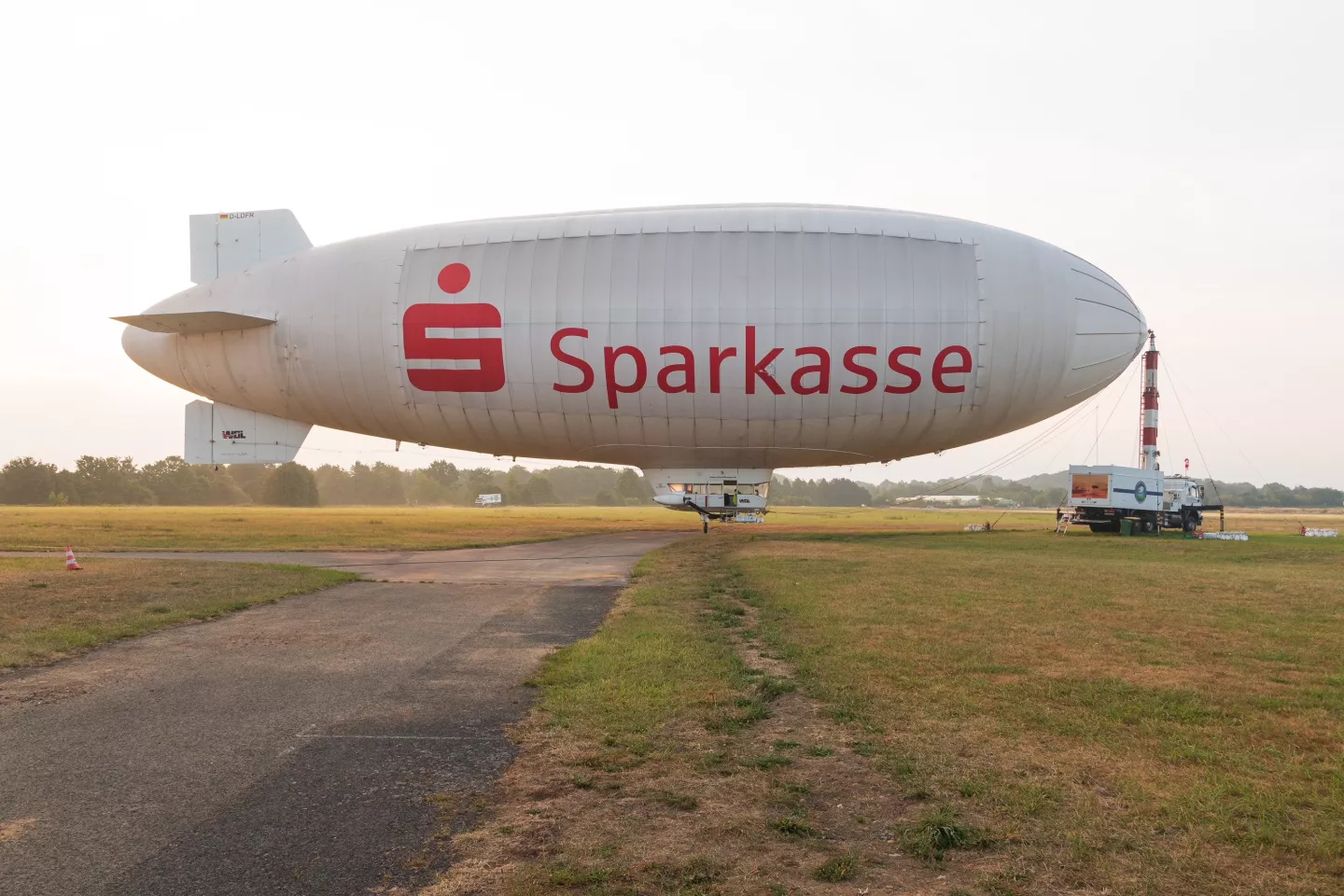
The pressure control system of Theo
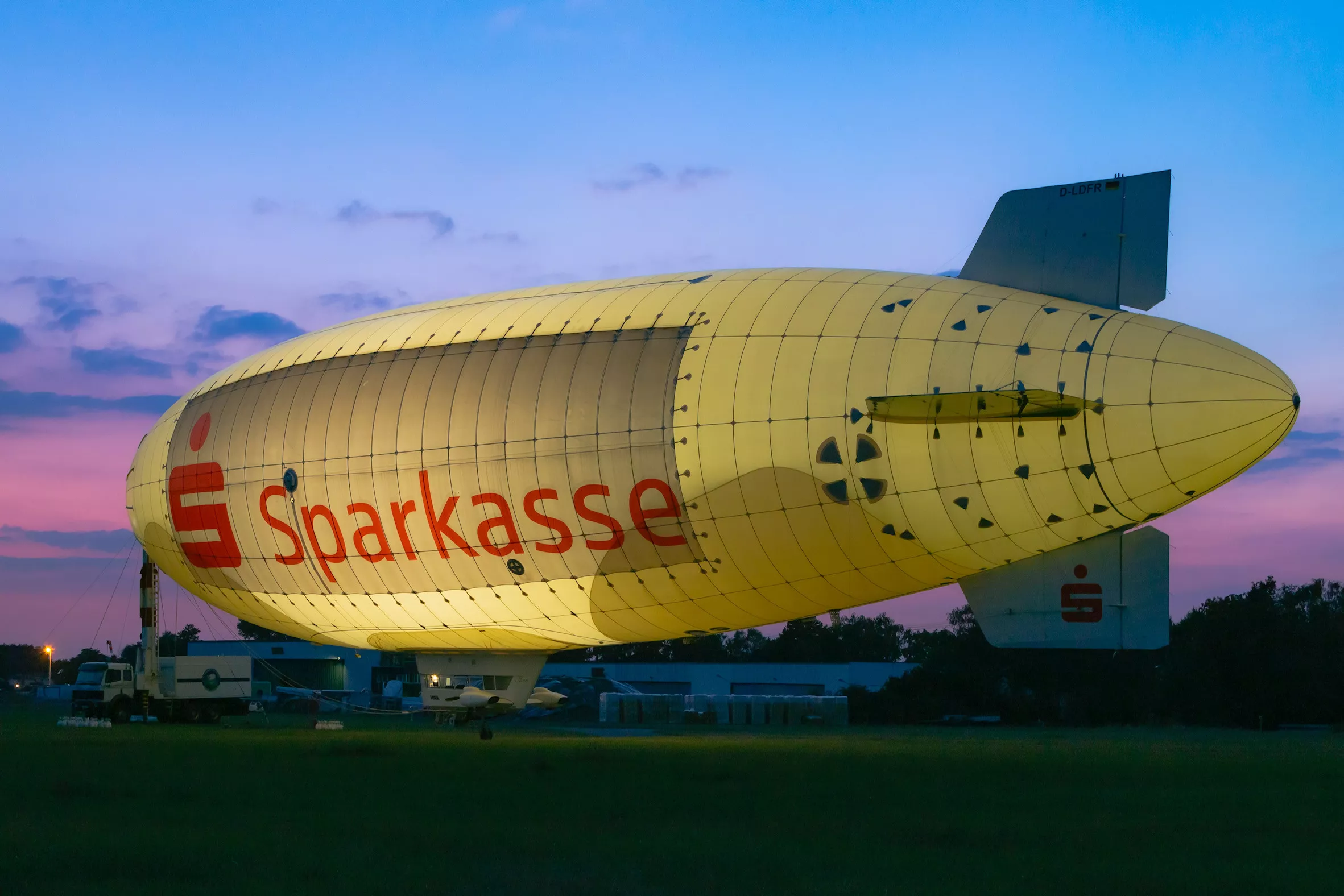
The hot air airship Theo of WDL Luftschiffgesellschaft is almost 60 meters long. It is used in the Essen and Mülheim region for various passenger flights and advertising purposes. Unlike the Zeppelin, which may be more widely known, a hot air airship does not have a rigid internal frame.
The rounded envelope of the airship responds very sensitively to steering inputs. This allows very precise manoeuvring. However, pressure loss makes manoeuvring more difficult and therefore less safe. Maintaining a constant internal pressure is therefore very important for the safe operation of an airship.
Three ballonets filled with air ensure this pressure stability. Their volume can vary to compensate for pressure fluctuations inside the large envelope. The pressure in the ballonets is always higher than the external air pressure so that the envelope remains fully inflated.
This overpressure is only a few millibars. This shows how important accurate pressure measurement is. Every airship must therefore have a pressure control system. In the case of Theo, a simple mechanical indicator (manometer) was initially used.
At that time, there was no system available on the market that could meet our requirements.

Digital pressure display as an additional feature
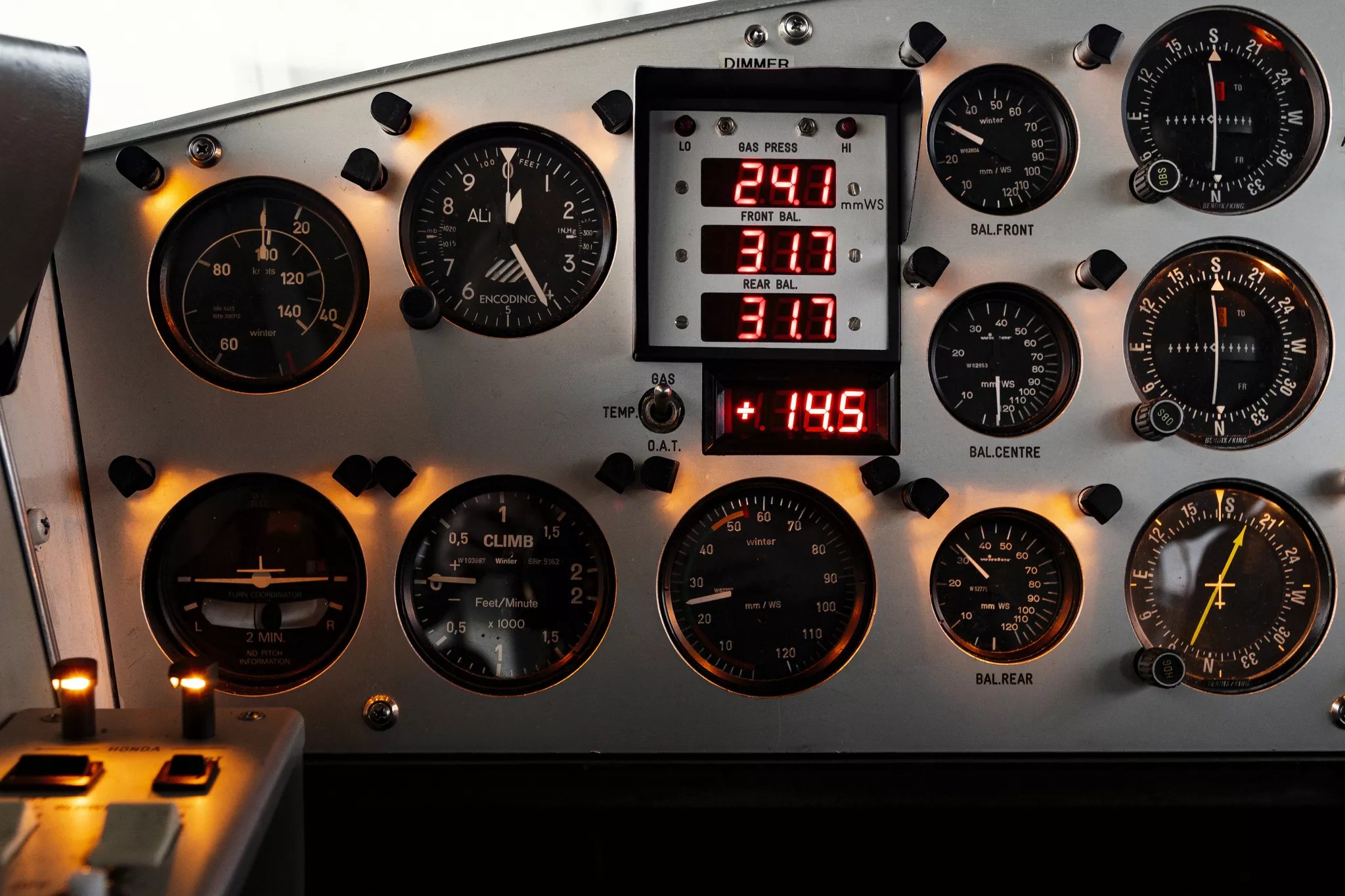
In 1988, Althen developed the Triple Press Indicator for Theo and other WDL airships on behalf of WDL Luftschiffgesellschaft. The TPI is a three channel system consisting of differential pressure sensors and a display with limit monitoring.
A sensor is installed in the outer envelope and in each of the three ballonets. Each sensor is connected to the display by cable, allowing the measured value to be shown. Using these displays, the pilot operates the valves of the individual pressure chambers and controls the airship.
All displays are combined in one compact unit. This allows the pilot to see the pressure conditions of the entire airship at a glance. In addition, there is another measuring channel that functions as a single channel system.
Development of the three channel system
“At that time, there was no system available on the market that could meet our requirements,” explains Hans Peter Gomolzig, Accountable Manager for Technology at WDL, recognised by the German Federal Aviation Authority, describing the situation at the time.
“At Althen we found a partner that was able to develop a three channel system that suited our needs.”
The differential pressure transmitters from Althen have an extremely small measuring range of only 125 mm water column, which corresponds to about 12.3 millibar.
Differential pressure measurement
The static system pressure in Theo is 14 bar. The very small measuring range compared with the system pressure places special demands on the pressure sensors used.
These sensors are based on the LVDT principle (Linear Variable Differential Transformer), which is both highly accurate and robust. A wear free LVDT displacement sensor measures the deformation of the pressure membrane. The signal from the sensor is then converted into an industrial standard signal.
Combined with the high resolution digital display, the pressure measurement and display allow much more precise manual control of the airship valves. This level of control is required for safe manoeuvring of the airship.
Other applications of differential pressure measurement
Differential pressure measurement is used in many applications, for example:
• Leak detection in technical systems
• Monitoring the contamination level of filters in HVAC systems
• Energy management in ventilation and air handling systems
• Maintaining and monitoring overpressure conditions in cleanrooms
-
Safe flights for all passengers30
years
-
In collaboration with14
years
-
Special pressure sensor12 mb
measurement

Share your challenge!
Contact us for a free consultation.