
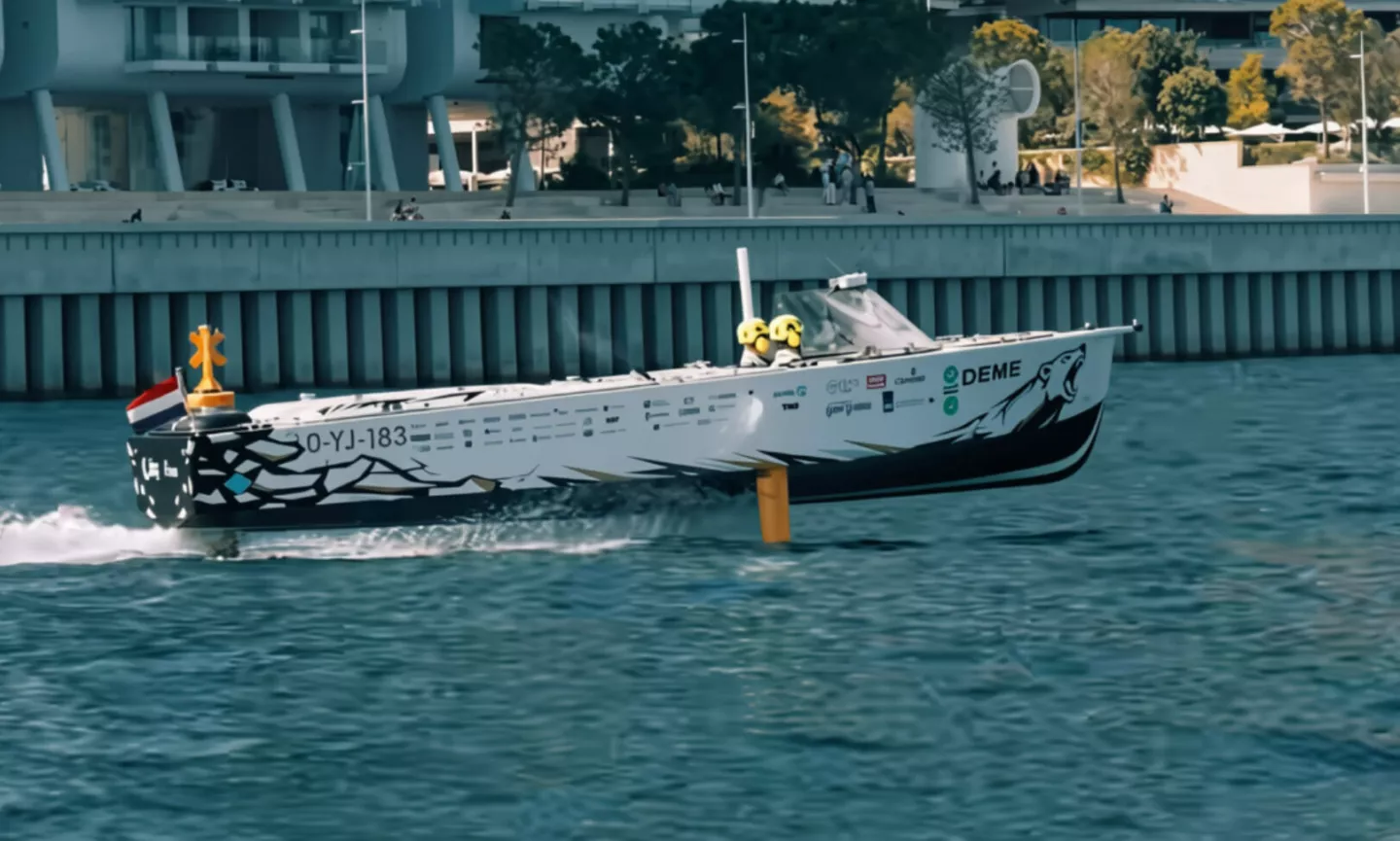
From Delft to Monaco on liquid hydrogen
For the 2025/2026 season, the TU Delft Hydro Motion Team set out to build its first racing boat powered by liquid hydrogen (LH₂), with the aim of participating in the Monaco Energy Boat Challenge.
The student team develops boats powered by sustainable energy technologies and puts them to the test in international competitions. After previously working with gaseous hydrogen, the team moved towards liquid hydrogen because of its higher energy density and the resulting potential to store more energy within the limited space available aboard the boat.
That transition also introduced a new engineering challenge: liquid hydrogen must be stored at cryogenic temperatures.
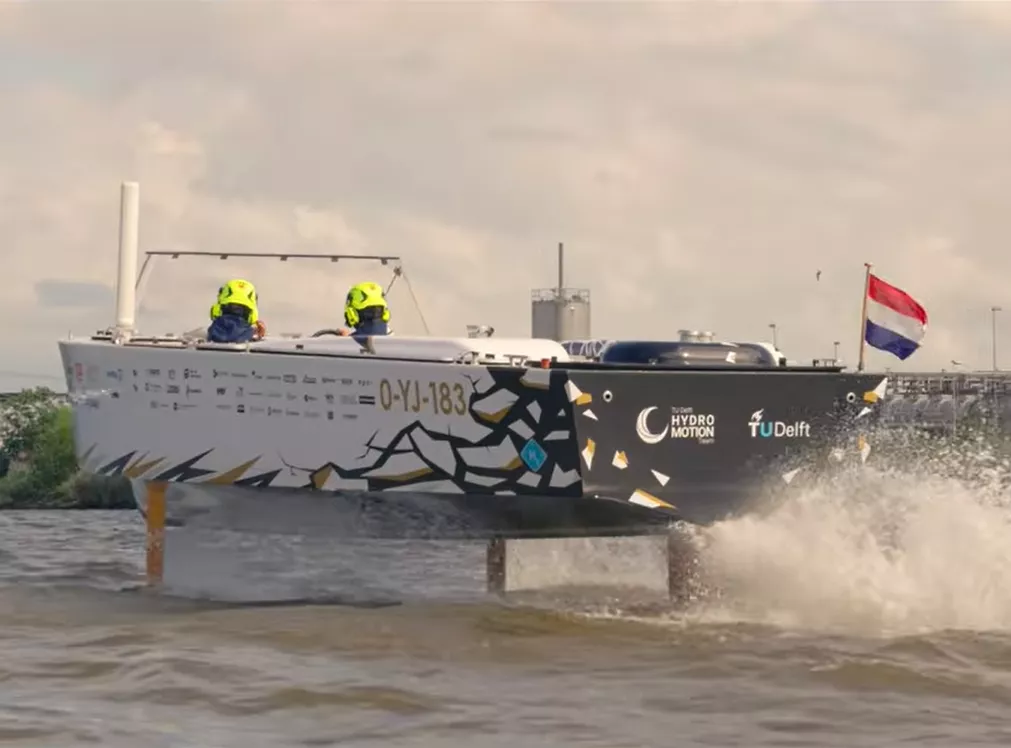
Taking liquid hydrogen on the road
The boat's liquid hydrogen tank is passively cooled. As heat gradually enters the tank, part of the liquid hydrogen evaporates and forms boil-off gas. This increases the pressure inside the tank.
Normally, excess boil-off gas can be vented periodically. For the Hydro Motion Team, however, the situation was more complex. Liquid hydrogen is not widely available, which meant the boat had to travel from the Netherlands towards Monaco with hydrogen already stored in the tank. Venting hydrogen during transport is not something that can simply be done anywhere.
The team therefore developed a boil-off system in which a small, continuous hydrogen flow is directed towards a secondary fuel cell. Instead of simply releasing the hydrogen, the fuel cell can convert it into potentially usable electrical energy while helping the system manage the increasing tank pressure.
Pressure monitoring became an important part of this architecture.
Two pressure points, two measurement ranges
The team needed hydrogen-compatible pressure transmitters that could be integrated into its existing measurement infrastructure. An analog output was preferred so that the pressure signals could be incorporated easily into the electronics already developed for the boat.
Two AGS4200 hydrogen-compatible industrial pressure transmitters were selected.
An AGS4200H01.6AB with a 0–1.6 bar measurement range and 4–20 mA output monitors the inlet pressure of the small boil-off fuel cell. The team uses this measurement to detect pressure outside the normal operating range, which can indicate a fault and allow the system to be shut down.
A second AGS4200H0025AB with a 0–25 bar measurement range and 4–20 mA output was installed at the inlet of the main fuel cell that powers the boat, where it performs the same monitoring function at a higher operating pressure.
The two transmitters therefore perform similar tasks at different points in the hydrogen system, with measurement ranges selected for the conditions at each location.
Built into the hydrogen system
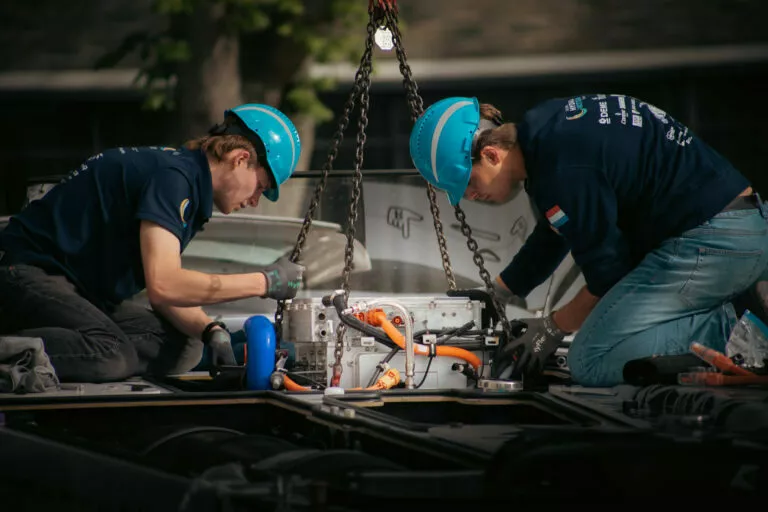
Both pressure transmitters were integrated directly into the hydrogen piping using T-splitters and standardized threaded connections.
On the electrical side, the sensors were connected to watertight cables leading to sealed electronics enclosures. Inside these boxes, the signals were processed by printed circuit boards designed and assembled by the Hydro Motion Team itself.
The 4–20 mA signals were converted into pressure values in software according to the sensor characteristics. For the transmitter at the inlet of the boil-off fuel cell, the team also compared the electronic pressure reading with a mechanical pressure indicator installed on the same pipe.
Turning sensor signals into usable data
During commissioning, the team identified small linear deviations originating from its own modular sensor readout electronics. Because these PCBs are designed to support several different sensor standards, such deviations were expected.
Rather than changing the pressure transmitter, the team adjusted the conversion parameters in software until the electronic readout matched the reference pressure indicator.
This illustrates an important part of measurement system integration: reliable pressure data depends not only on selecting the appropriate sensor, but also on understanding the complete measurement chain from sensor output to electronics and software.
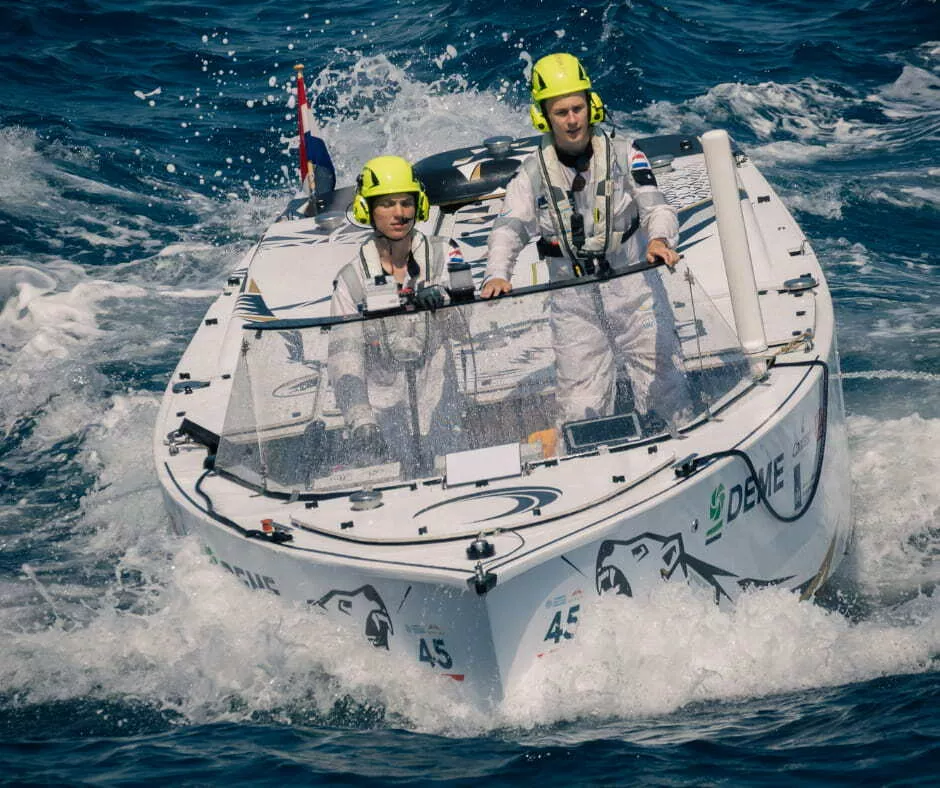


Engineering support from selection to delivery
Finding suitable components for a liquid hydrogen system meant combining several requirements: hydrogen compatibility, the appropriate pressure ranges and an output that could be integrated into the team's existing electronics.
Althen supported the Hydro Motion Team in navigating the available pressure sensor options and datasheets to identify transmitters matching these system requirements. According to the team, the subsequent ordering process was straightforward and the sensors arrived within the expected timeframe.
By combining hydrogen-compatible pressure measurement with its own electronics and control architecture, the TU Delft Hydro Motion Team was able to integrate pressure monitoring at two important points in an ambitious liquid hydrogen propulsion system.

Project highlights
- Application: Liquid hydrogen powered racing boat
- Customer: TU Delft Hydro Motion Team
- Event: Monaco Energy Boat Challenge 2026
- Measurement: Hydrogen pressure monitoring
- Sensor 1: AGS4200H01.6AB
- Pressure range: 0–1.6 bar
- Sensor 2: AGS4200H0025AB
- Pressure range: 0–25 bar
- Output: 4–20 mA
- Integration: Hydrogen piping, custom electronics and software
- Althen contribution: Sensor selection and sponsorship

Discuss your hydrogen application
Looking for reliable pressure measurement in your hydrogen application?
Pressure monitoring for hydrogen systems
Product used in this application
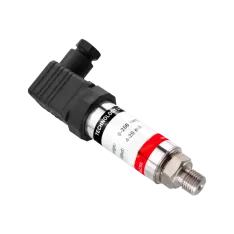
AGS4200H Hydrogen compatible pressure transducer
- Compatible for use within Hydrogen based environment
- Measuring range: 0 - 0,5 to 0 - 1.500 bar
- ± 0.25% accuracy, optional ± 0.1%