
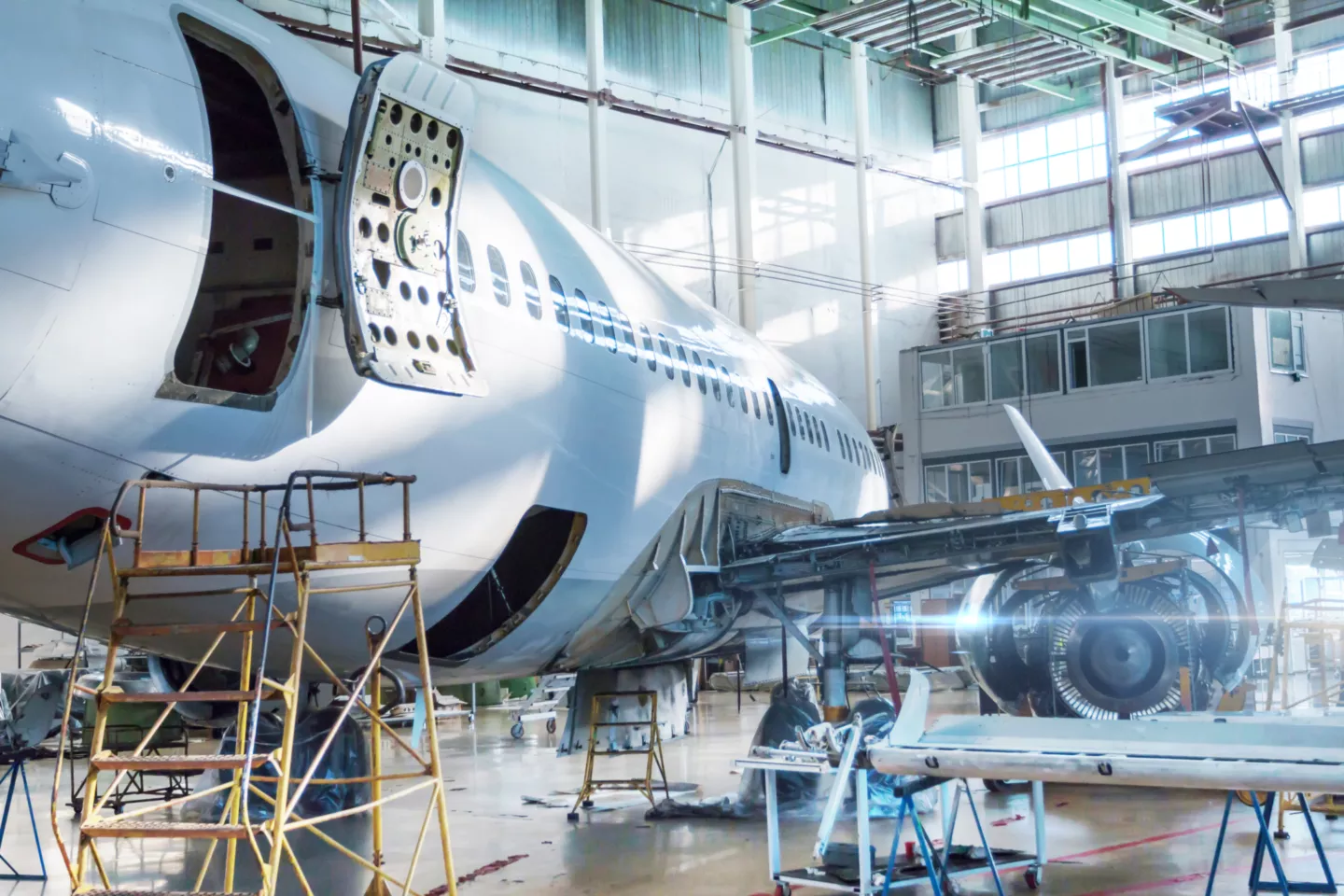

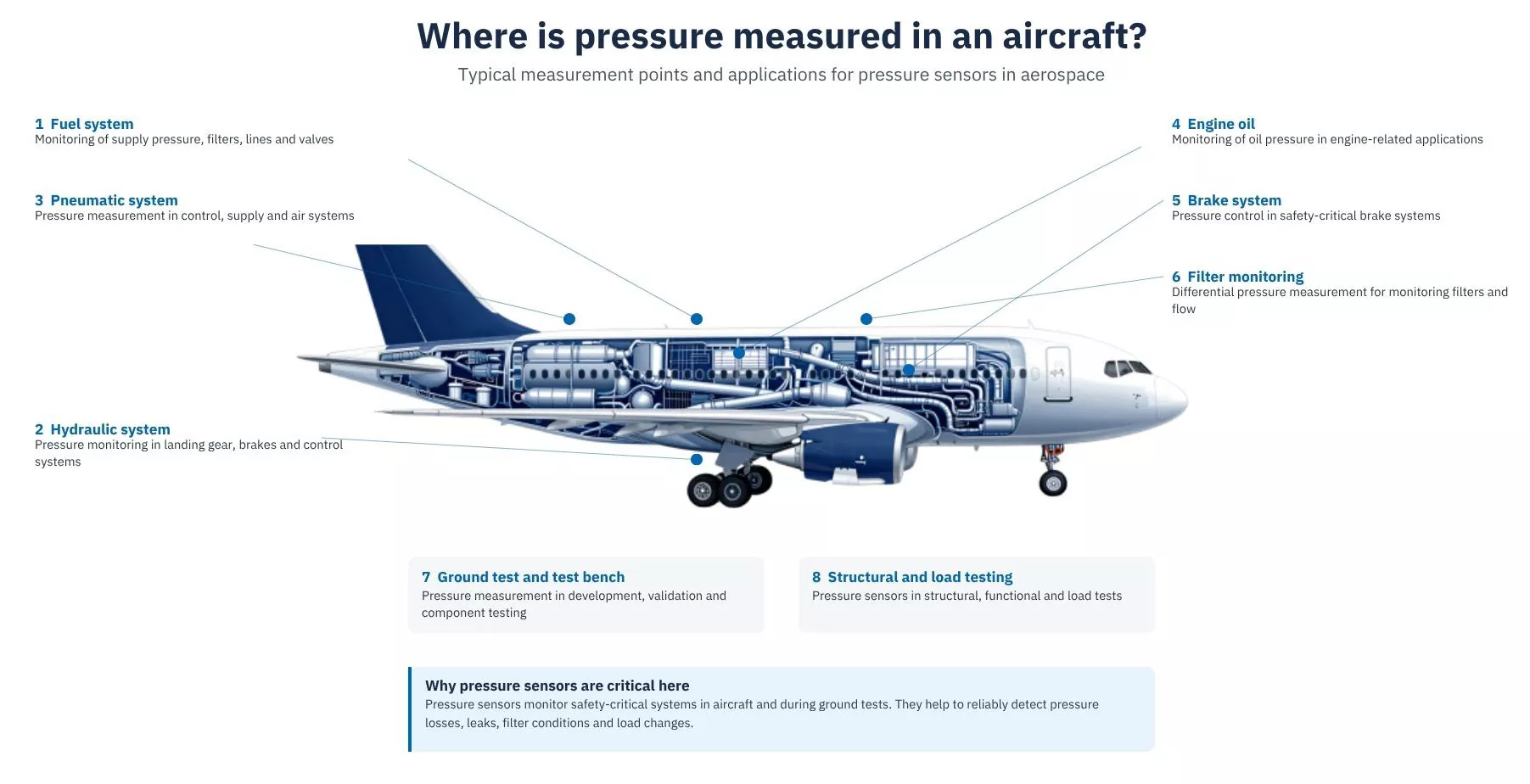
Pressure sensors perform numerous safety-critical measurement tasks in aerospace applications. They are used both during flight operations and for ground testing, for example in fuel, hydraulic and pneumatic systems, engine oil and braking systems, airflow and differential pressure measurements, filter monitoring, structural, functional and load testing, as well as test benches for aircraft components.
In so-called non-flying applications, pressure transducers support the development, production and testing of aircraft and components. During flight operations, they are used for the continuous monitoring of critical systems and must operate reliably even under rapid changes in temperature, vibration and ambient pressure.
The requirements are therefore significantly higher than in many conventional industrial applications. In addition to accuracy and long-term stability, temperature resistance, vibration resistance, compact dimensions, low weight, suitable connections and complete traceability are particularly important.
Ground Testing & Structural Testing
Before new aircraft or components are approved for operation, hydraulic, pneumatic and structural systems must undergo comprehensive testing. Pressure sensors measure the relevant operating pressures and enable accurate assessment of system behavior. The following characteristics are particularly important for these testing applications:
- high repeatability
- reliable continuous operation
- suitable pressure and temperature ranges
- compatibility with the measured media
- easy integration into existing measurement systems
For large test benches, it is also essential that calibration data and sensor information can be clearly assigned to the respective sensor.
TEDS Simplifies Sensor Identification
Complex measurement setups often involve a large number of sensors operating simultaneously. TEDS, short for “Transducer Electronic Data Sheet,” simplifies their management.
Information such as sensor identification, sensitivity, calibration data and correction values is stored directly in the sensor and automatically read by the measurement system. This simplifies commissioning and sensor replacement while reducing the risk of incorrect configurations. TEDS is particularly useful when
- many sensors are used simultaneously,
- sensors are replaced frequently,
- different sensitivities or calibration values are involved,
- test benches are used by multiple teams,
- there is a high risk of manual configuration errors,
- unambiguous traceability is required.
Practical Tip:
TEDS reduces configuration errors, but does not replace verification of the measurement range, mechanical installation and calibration status!
Special Requirements During Flight Operations
Sensors used directly on board an aircraft must provide stable measurement values even under rapidly changing conditions. Large temperature ranges, high vibration levels and rapid changes in atmospheric pressure are particularly demanding.
- Temperature Resistance
Depending on the installation location, very low ambient temperatures may occur at the same time as high media temperatures. Sensors must not only withstand these conditions but also provide a stable output signal across the entire temperature range. For particularly demanding applications, high-temperature pressure sensors are available for media temperatures of up to approximately 200 °C. Depending on the design, more compact versions can provide continuous operation at temperatures of up to approximately 135 °C. - Compact and Lightweight Design
Installation space and weight are limited in aircraft. Pressure transducers therefore often need to be extremely compact without compromising accuracy or robustness. This is particularly important for retrofit applications and replacement solutions for legacy systems. In such cases, a new sensor often has to fit within a predefined installation envelope while retaining the existing mechanical and electrical connections. - Pressure Equalization During Altitude Changes
During climb and descent, atmospheric pressure can change significantly within a short period of time. Gauge pressure sensors therefore require reliable pressure equalization. Integrated venting to atmosphere can help ensure that the output signal remains stable even during rapid altitude changes. At the same time, the design must prevent moisture or contaminants from affecting the measurement. - Vibration and Mechanical Loads
On board an aircraft, sensors are continuously exposed to vibration, shock and pressure cycling. Housings, welded joints, cables and connectors must therefore be mechanically robust and resistant to vibration. - Aerospace-Specific Connections and Interfaces
Standard industrial connections are not always compatible with existing aircraft systems. Special electrical connectors, threads and process connections compliant with aerospace standards are often required. Typical examples include: hermetic connectors in accordance with D38999, process connections in accordance with MS or AS standards, high-temperature-resistant cables, shielded wiring, and special UNF or sealed process connections.
In addition to mechanical compatibility, leak tightness, electrical reliability and electromagnetic compatibility are critical. For replacement solutions in legacy systems, it may be necessary to replicate not only the pressure range, but also the installation dimensions, connection layout and electrical characteristics of the original sensor exactly.
Do’s and Don’ts for Selecting Aerospace Pressure Sensors
Do
- Consider the maximum pressure, including pressure spikes. Do not specify only the nominal operating pressure.
- Check temperature-related errors across the entire operating range. An accuracy specification at room temperature alone is not sufficient.
- Confirm media compatibility for all wetted materials.
- Define mechanical and electrical interfaces at an early stage.
- Include vibration and shock requirements in the specification from the outset.
- For gauge pressure sensors, verify the reference to atmospheric pressure.
- Define calibration, traceability and documentation requirements in advance.
- For legacy systems, also compare the characteristic curve, connector pinout and supply voltage.
Don’t
- Do not select a sensor based solely on the pressure range.
- Do not adopt a standard industrial design without checking installation space and connections.
- Do not ignore atmospheric pressure changes with altitude.
- Do not automatically assume that a chemically resistant housing also contains suitable sealing materials.
- Do not approve a replacement sensor based solely on similar dimensions.
- Do not wait until after the prototype phase to add customer-specific requirements.
- Do not treat documentation and long-term availability as secondary considerations.
Silicon-on-Sapphire Technology for Demanding Measurement Applications
Silicon-on-Sapphire technology, or SoS, is well suited for high pressures, wide temperature ranges and demanding media conditions. In aircraft, it is used particularly in hydraulic, fuel, pneumatic and engine-adjacent systems. Typical measured variables include hydraulic pressure, fuel supply pressure and oil pressure.
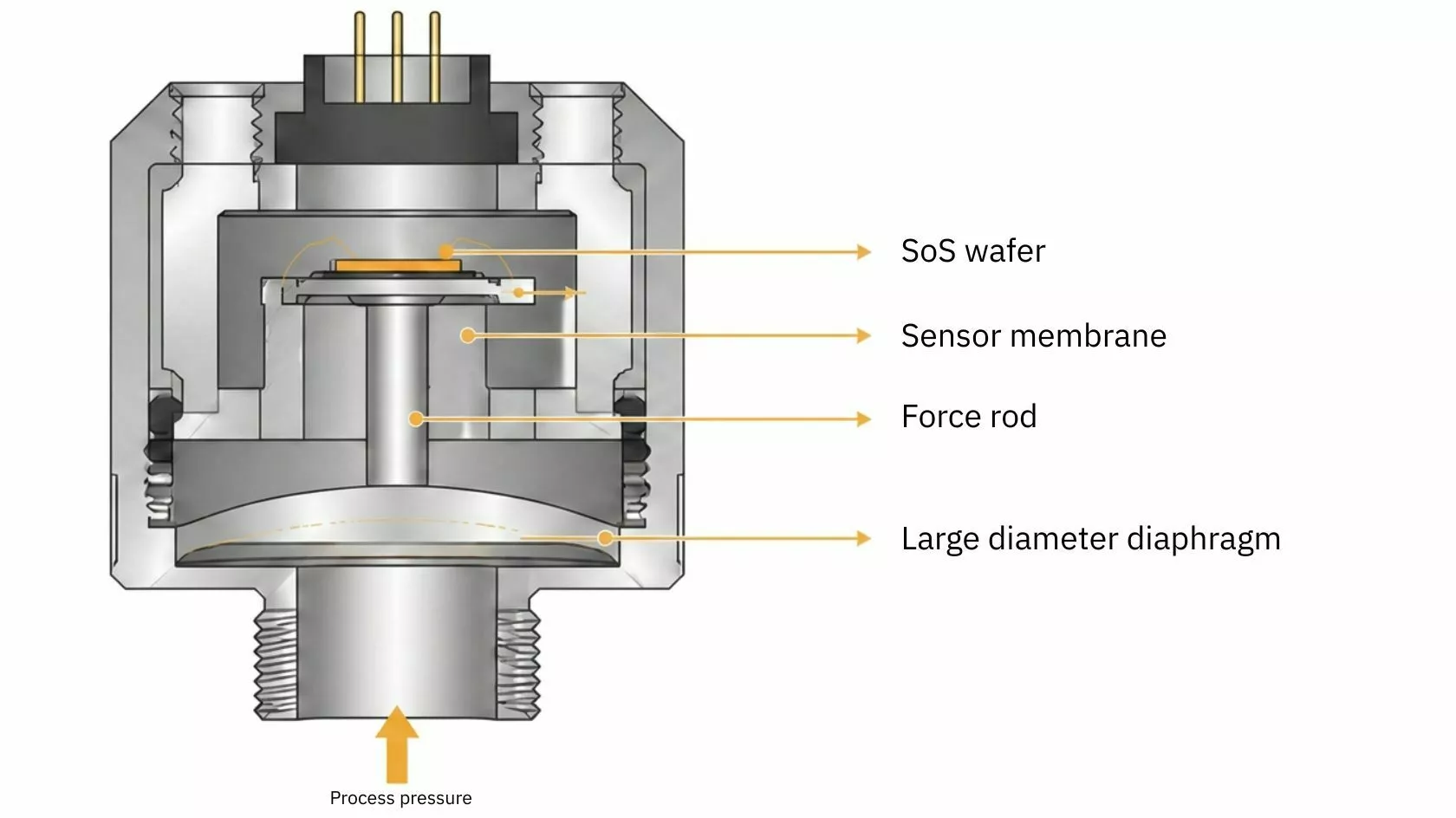
In this technology, silicon strain gauge structures are formed on a sapphire substrate. Combined with a titanium housing, this creates a robust sensor structure with excellent long-term stability. It is particularly suitable for applications requiring high pressure resistance, low temperature drift, corrosion resistance and vibration resistance.
Depending on the design, SoS pressure transducers can cover pressure ranges of up to approximately 1,500 bar. Fully welded titanium constructions reduce potential leakage points and are particularly well suited for safety-critical fluid systems.
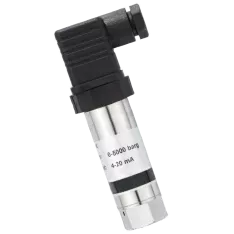
AHP1000 | AHP1100 High-Pressure Transducer
- Measuring range: 0 - 600 to 0 - 5.000 bar
- High resistance to over-pressure
- RoHS certified
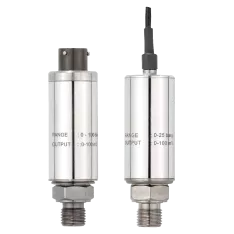
AHI2000 Premium Pressure Transmitter
- High accuracy and performance
- Silicon-on-Sapphire sensor technology for outstanding stability
- Pressure ranges to 1,500 bar

Do you have an aerospace application?
Our experts will assist you in selecting suitable pressure transducers and in developing bespoke sensor solutions.
Pressure Measurement in Fuel, Hydraulic and Pneumatic Systems
Fuel, hydraulic and pneumatic systems perform different functions on board an aircraft, but they place similarly high demands on pressure measurement technology. Sensors must provide reliable measurement values even under changing temperatures, vibration and rapid pressure fluctuations.
Fuel Systems
In fuel systems, pressure is used, among other things, to monitor the operation of pumps, lines, filters and valves. Low supply pressure, for example, can indicate a disrupted fuel supply, a weak pump or a leak. Increasing differential pressure across a filter, on the other hand, can be a sign of increasing contamination or restricted flow.
Pressure sensors must therefore not only be compatible with the fuel being used, but must also maintain leak-tight and temperature-stable operation over the long term. Particularly important are:
- fuel-compatible materials and seals
- low leakage rates
- compact and lightweight designs
- shielded cables and reliable electrical connectors
- stable measurement values under changing ambient pressure
For gauge pressure measurements, it must also be taken into account that atmospheric pressure changes rapidly during climb and descent. Suitable atmospheric referencing or venting prevents these changes from distorting the measurement result.
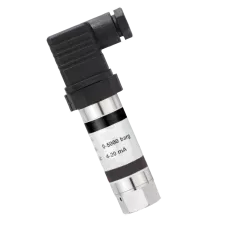
AHP1000H Hydrogen compatible high-pressure transducer
- Measuring range: 0 - 600 to 0 - 5.000 bar
- For use within Hydrogen based environments
- RoHS certified, ATEX version available
Hydraulic Systems
Hydraulic systems generate the forces required, for example, for landing gear, brakes, control surfaces and other actuators. Operating pressures can therefore be correspondingly high. In these systems, pressure sensors are used both for functional monitoring and for detecting pressure losses, pressure spikes and abnormal load conditions.
In addition to the regular operating pressure, the sensors must withstand short-term overpressure and rapid load changes. At the same time, good dynamic response is required to ensure that rapid pressure changes are captured reliably.
A stable pressure profile confirms that pumps, valves, accumulators and lines are operating correctly. Deviations can indicate, among other things, leaks, worn components, air in the system or incorrect valve positions.
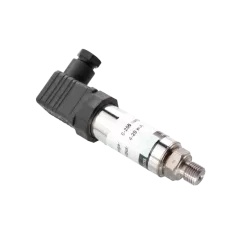
AGS4200 Standard pressure transducer
- Measuring range: 0 - 0,5 to 0 - 1.500 bar
- Silicon-on-Sapphire sensor technology
- ± 0.25% accuracy, optional ± 0.1%
AHP1000 | AHP1100 High-Pressure Transducer
- Measuring range: 0 - 600 to 0 - 5.000 bar
- High resistance to over-pressure
- RoHS certified
Pneumatic Systems
Pneumatic systems operate with compressed air or other gases. They are used, for example, in control, actuation and supply systems. Compared with liquids, gases are compressible, which means that pressure changes are often faster and more dynamic.
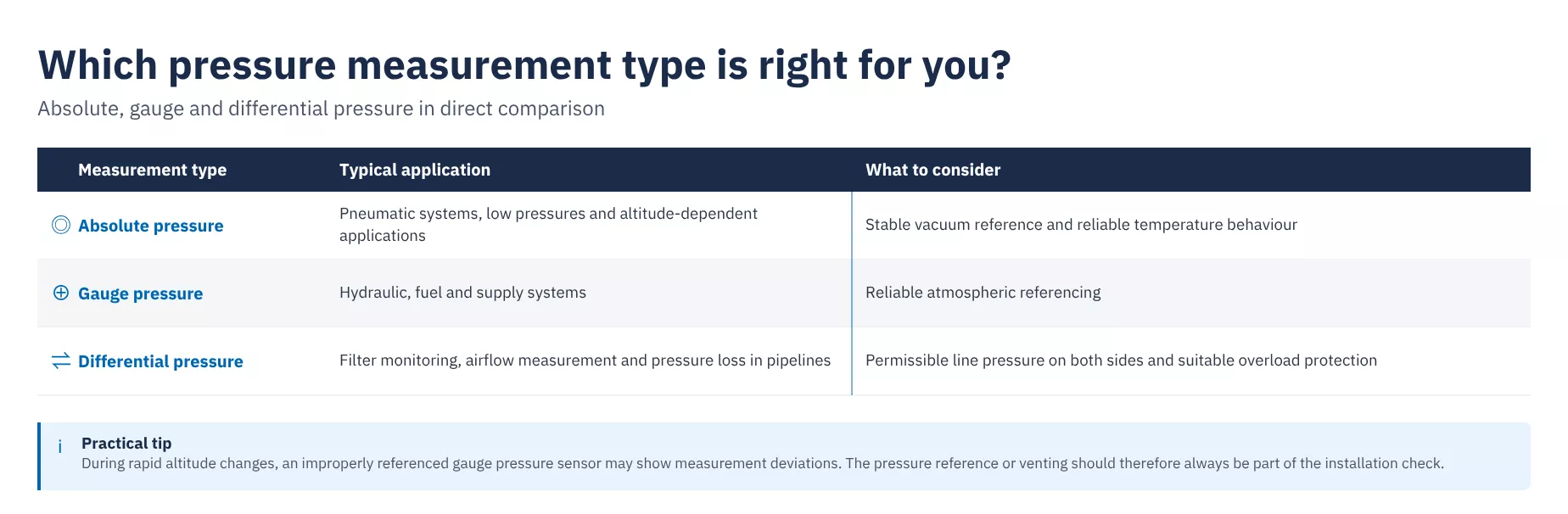
For pressure sensors, this means that, in addition to accuracy, a sufficiently fast response time is important. Depending on the application, gauge, absolute or differential pressure sensors are used. Differential pressure measurements are suitable, for example, for monitoring filters, airflow or pressure losses in lines.
Output Signals and System Integration
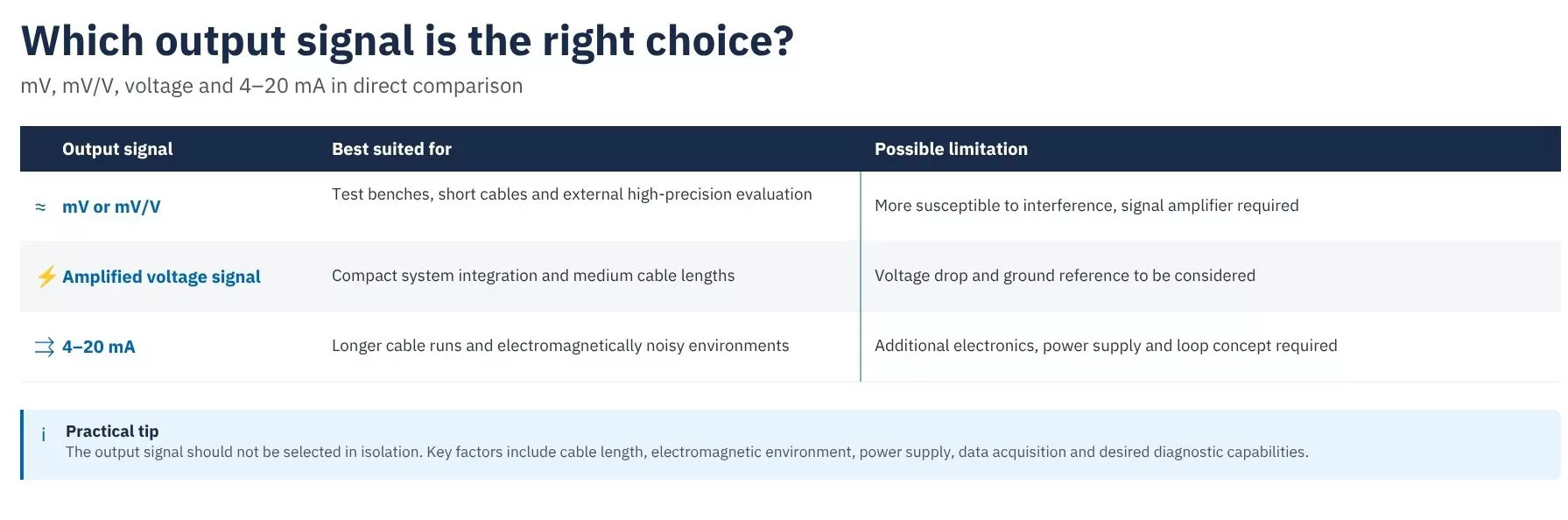
The appropriate output signal depends on the existing measurement and control system. In test benches, passive mV or mV/V signals are commonly used and evaluated using external signal conditioners or measurement amplifiers.
For permanently installed systems, amplified voltage outputs or 4–20 mA signals may be advantageous. Key factors to consider when selecting the output signal include cable length, susceptibility to interference, supply voltage and the available signal conditioning electronics.
When a Custom Solution Is Required
Standard products tend to reach their limits when several demanding requirements must be met at the same time. Typical examples include:
- low absolute pressures at high temperatures
- very limited installation space
- special process connections or electrical connectors
- specific output signals
- redundancy requirements
- customer-specific calibration
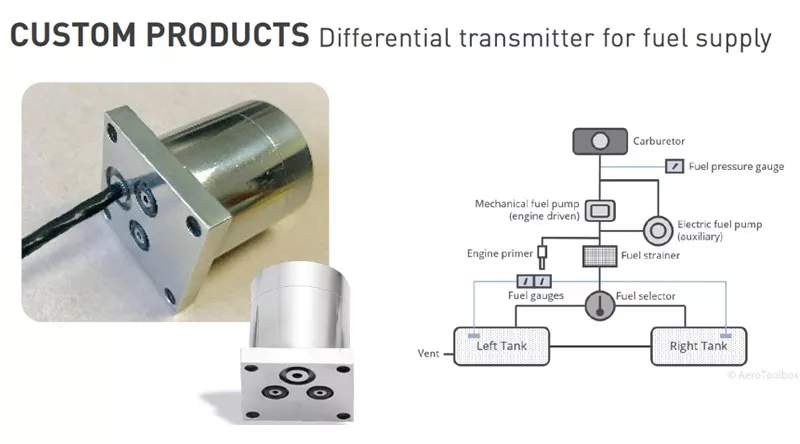
In such cases, a custom sensor design is often more suitable than modifying a standard production sensor at a later stage.
A tailored solution can be optimized specifically for the application in terms of housing, pressure range, output signal, process connection, electrical connector, cable, temperature compensation and documentation.
Checklist
A standard product is often sufficient if:
- the pressure and temperature ranges are within commonly available specifications,
- existing standard connections can be used,
- sufficient installation space is available,
- no special redundancy is required,
- the required output signal is available.
A custom solution should be considered if:
- several special requirements must be met simultaneously,
- installation space is very limited,
- specific aerospace connections are required,
- special temperature compensation is necessary,
- an existing sensor must be replaced exactly,
- redundancy or a specific characteristic curve is required,
- special documentation or calibration requirements apply.
Send us your pressure range, temperature range, medium, connection details and available installation space. Our experts will assess whether a standard product is sufficient or whether a custom solution is the better choice.
Sensor-Only Solutions for System Integrators
Not every application requires a complete pressure transmitter. In pumps, valves, control units or custom measurement modules, standalone sensor elements or partially integrated sensor solutions can also be used.
These versions can be integrated directly into the system manufacturer’s assembly. The pressure range, electrical output characteristic and temperature behavior can be tailored to the specific application in advance. For safety-critical systems, multiple electrical connections can also be implemented to provide redundant measurement paths.
Replacement Solutions for Legacy Aircraft Systems
Aircraft and helicopters often remain in service for several decades. When original pressure sensors are discontinued, it is not sufficient to simply select a product with the same measurement range. A technically compatible replacement must fit mechanically within the existing installation space, retain the existing process connection, and match the system’s supply voltage, output signal, characteristic curve and connector pinout.
Temperature behavior, accuracy, overpressure capability and long-term stability must also be comparable to the requirements of the original application. If complete technical documentation is no longer available, it may be necessary to reconstruct the mechanical and electrical characteristics. Prototypes are then validated through pressure, temperature, vibration and functional testing.
Such legacy or obsolescence projects therefore often require a custom development approach. At the same time, they can help secure the long-term availability of replacement parts for existing aircraft and helicopter systems.
Quality and Traceability in Accordance with AS9100D
In the aerospace industry, a sensor’s technical performance is closely linked to the quality of the development and manufacturing processes.
AS9100D is an internationally recognized quality management standard for the aerospace and defense industries. It extends ISO 9001 with industry-specific requirements, including product safety, risk management, traceability and configuration management.
For users, this means that development, manufacturing, testing and documentation are carried out according to controlled and traceable processes. This is particularly important for custom sensors, as changes to materials, components and manufacturing processes must be carefully evaluated and documented.
Testing and Documentation
Depending on the application, different test records and documentation may be required, for example:
- calibration certificates and material certificates
- dimensional drawings and connection diagrams
- temperature and pressure cycling tests
- vibration and shock testing
- long-term and overpressure testing
For new developments, a step-by-step validation process is recommended. Prototypes are first tested under realistic conditions and then optimized in a targeted manner. This allows technical risks to be identified at an early stage and helps ensure that the final production solution is reliable.
Conclusion
Pressure sensors for aerospace applications must provide stable and traceable measurement values even under highly variable environmental and operating conditions. Standard products can cover many test bench and ground-based applications. For direct installation in aircraft, legacy systems or particularly demanding combinations of temperature, pressure and installation space, however, custom solutions are often required. Key factors include not only pressure range and accuracy, but also temperature behavior, size, weight, material selection, connections, vibration resistance, documentation and long-term availability.
Do you have an aerospace application?
Our experts will assist you in selecting suitable pressure transducers and in developing bespoke sensor solutions.