Compare our sensors
Not sure which sensor is the right fit? Select up to three sensors to view technical comparison.
Graphtec GL7000 Modular Datalogger
Modern data loggers, such as the GL7000 can do much more than simply capture data. Through integrated intelligence, data can be combined, interpreted and analyzed. Data can also be used as a trigger: a data logger can be set to start capturing data when a certain signal comes from the sensor. Moreover, the data logger itself can determine which data is interesting and record it at high frequency while recording the rest at a lower sample rate. In this way, memory is used as efficiently as possible.
A data logger consists of a programmable microprocessor, a storage medium, at least one interface, and one or more channels for connecting sensors. An analog-to-digital converter then converts this data to "memory-compatible" data and then writes it to the built-in memory, an SD card or a USB flash drive. The recorded data can then be analyzed directly on the data logger or transferred to a computer and evaluated there.
We can supply a complete configuration with the necessary interface modules so that you can connect every possible sensor in your setup directly and easily. In this we like to think with you, together draw up a measurement plan suitable for the application. In this case, we provide both hardware and software preparation, connectors, cabling, signal processing modules (GLET), but also the calibration data of the various sensors are programmed directly. In short, after receiving the system, you can connect everything simply and quickly.
-
High-precision multi-channel data acquisitionSimultaneous acquisition of multiple measurement variables, such as voltage, temperature, force, or pressure, with high accuracy and sampling rates.
-
High sampling rates and real-time analysisSuitable for dynamic processes and rapidly changing signals thanks to high sampling rates and powerful data processing.
-
Flexible interfaces and easy integrationSupports a wide range of interfaces such as Ethernet/LAN, USB, and SD card, with optional cloud and remote access for seamless integration.
-
Modularity and scalabilityExpandable channels and flexible adaptation to different measurement tasks make the GL7000 a future-proof investment for growing requirements.
Common applications of high-end data loggers
Although applications may differ depending on the area of use, they often place similar demands on measurement technology. High-end data loggers need to acquire multiple signals simultaneously, synchronize them precisely, and evaluate them reliably in order to deliver robust and comparable results:
- Automotive Testing & Vehicle Development
- Test Benches & Validation (Test & Measurement)
- Industry & Production Monitoring
- Energy & Power Measurement
- Temperature and Environmental Measurements
- Machine Monitoring & Condition Monitoring
- Research & Development (R&D)
- Mobile Measurements & Field Testing
Criteria for selecting the right high-end data logger
The selection of a suitable high-end data logger depends strongly on the specific measurement task and system requirements. In addition to data acquisition itself, factors such as signal diversity, dynamics, integration, and data evaluation also play a decisive role.
- Measurement variables and number of channels
First, it is important to define which physical quantities need to be measured, such as voltage, temperature, pressure, or force, and how many channels are required simultaneously. High-end data loggers enable synchronized acquisition of multiple signals. - Sampling rate and signal behavior
Dynamic processes require high sampling rates, while lower sampling rates are often sufficient for long-term measurements. The data logger should match the temporal behavior of the signals being measured. - Accuracy and resolution
Depending on the application, high measurement accuracy can be essential, particularly for validation and testing tasks. Factors such as noise, drift, and resolution play an important role. - Signal types and inputs
The data logger should support the required input types, such as analog signals, thermocouples, strain gauges, or digital interfaces. - Storage and data management
For long-term measurements or large data volumes, sufficient internal storage or an external storage solution, such as an SD card or network storage, is required. - Interfaces and integration
Important aspects include integration into existing systems such as test benches, PLCs, or DAQ systems, as well as the available interfaces, such as Ethernet, USB, or cloud connectivity. - Operation and software
An intuitive operating concept and powerful software for visualization and analysis significantly simplify the evaluation of measurement data. - Environmental conditions
Temperature, vibration, humidity, or mobile applications can influence the selection. The data logger should be suitable for the respective operating environment. - Scalability and future-proofing
Modular systems offer the advantage of being expandable when requirements increase or change.
We are happy to support you in selecting the right high-end data logger – tailored to your application and system requirements. Contact us!
Our services
Projects
Data loggers in different applications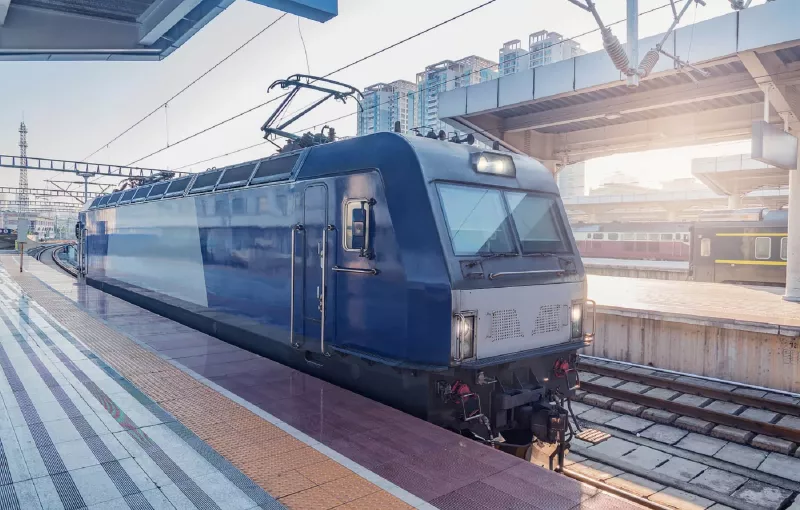
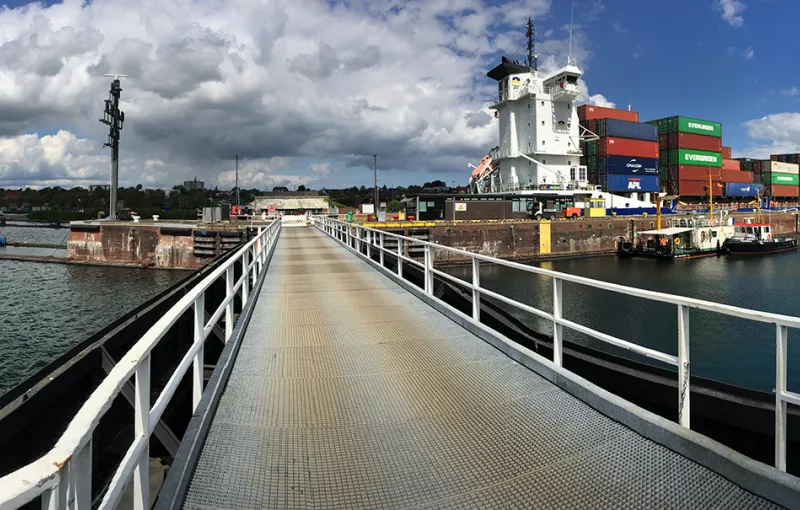
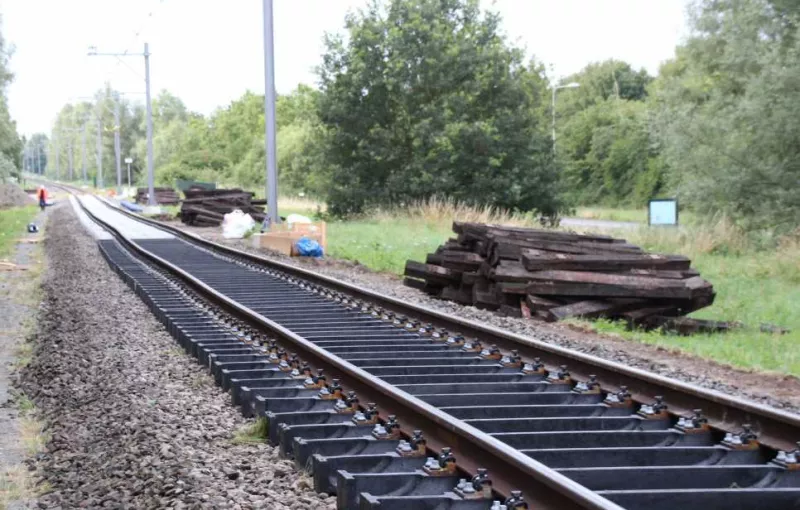
How can we help you with your application?
We offer Graphtec data qcquistione systems but can also help you with matching sensors, accessories or a complete measurement solution.