Introduction of Delft Hyperloop
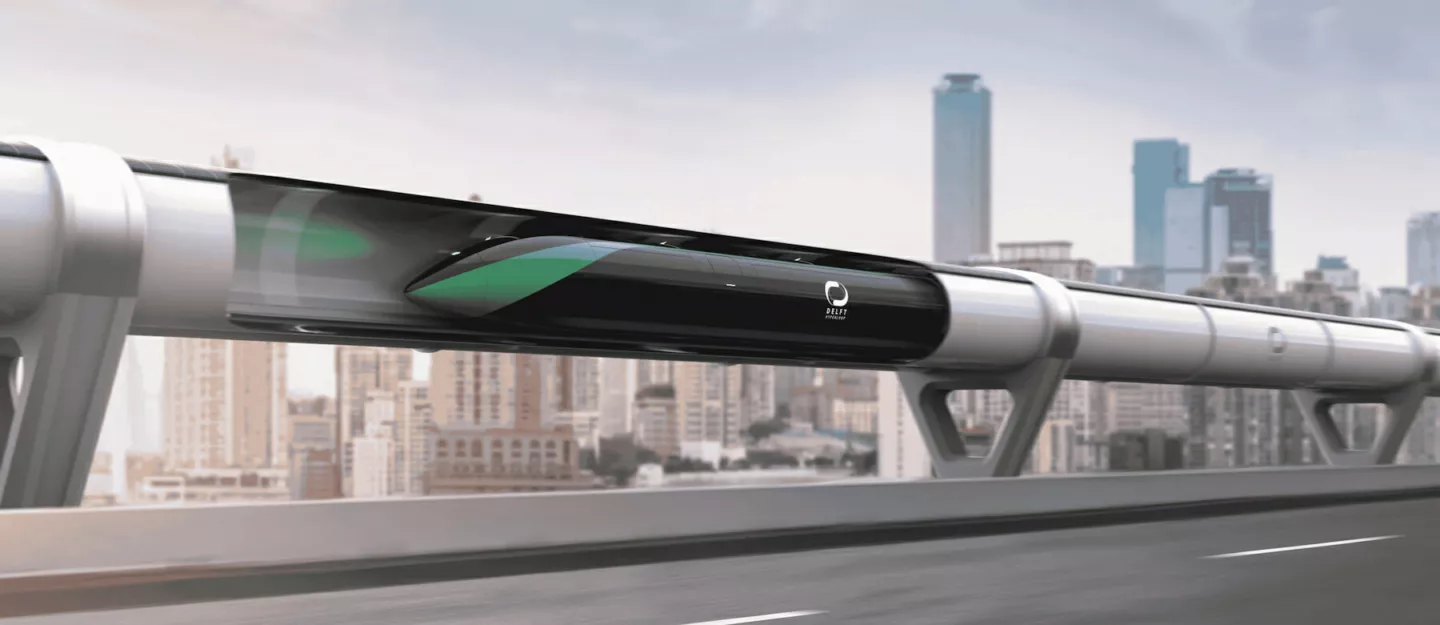
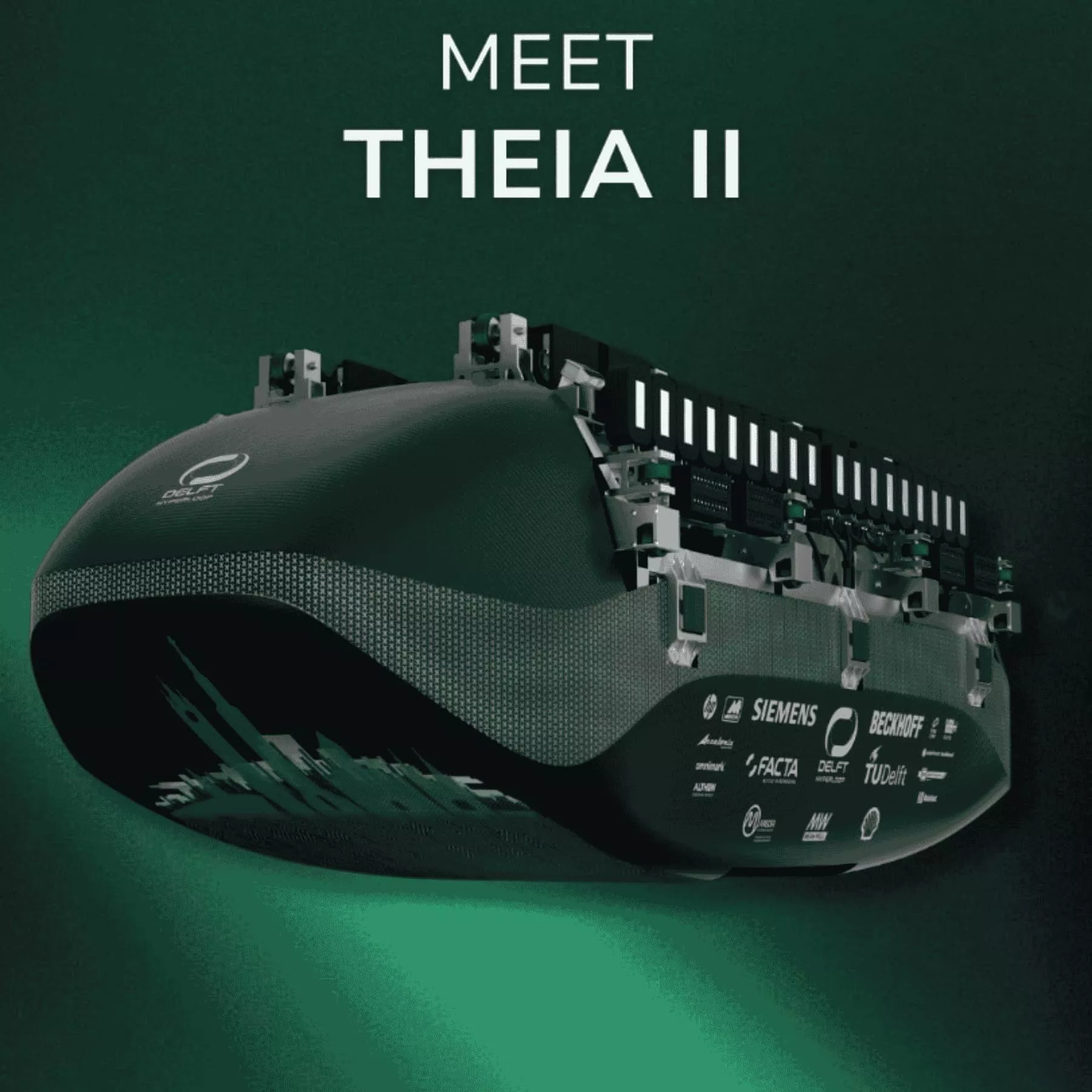
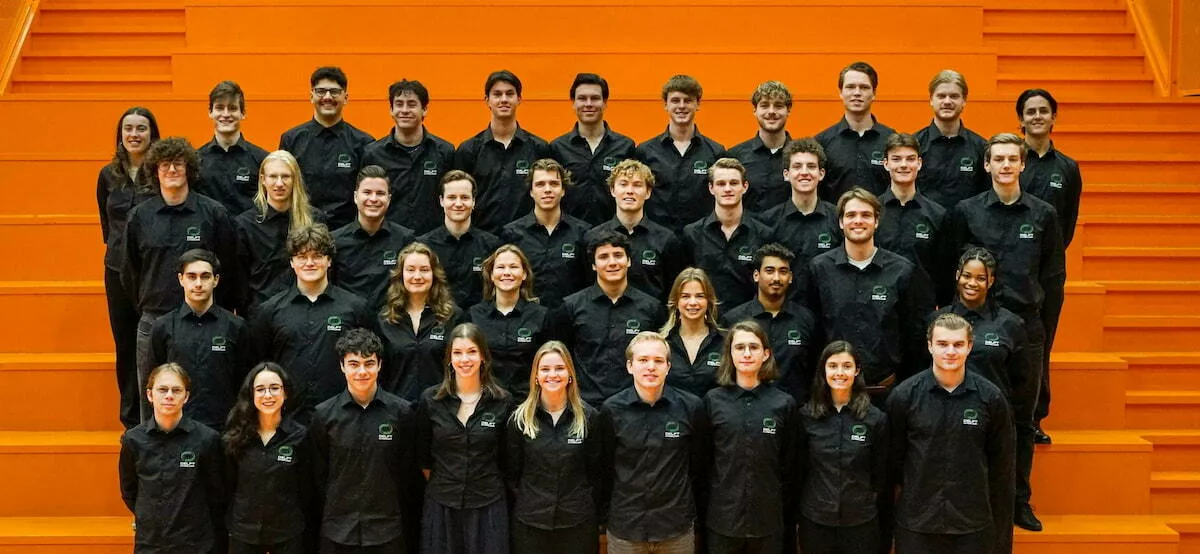
Delft Hyperloop X, the tenth Delft Hyperloop team, consists of 45 TU Delft students who dedicate one year to developing a working hyperloop prototype. Their latest vehicle, THEIA II, focuses on scalable and sustainable hyperloop technology for future cargo transport.
THEIA II and European Hyperloop Week
After successful demonstrations at the European Hyperloop Center in Veendam, the team continues to develop solutions for infrastructure standardisation, vacuum technology, magnetic levitation, propulsion systems and the scalability of a future hyperloop network. A major milestone for the team is demonstrating the potential of hyperloop technology during the European Hyperloop Week 2026, where they aim to showcase THEIA II and its capabilities.
Laser sensors for levitation control
For its levitation and control system, Delft Hyperloop needed a reliable way to measure the offset of the vehicle relative to the track. This measurement is essential for stable levitation, controlled movement and safe system behaviour.
Althen supplied FDRF603 laser triangulation sensors for this purpose. These sensors are used to calculate the vehicle’s distance from the track and provide feedback to the control system.
The sensors had to meet demanding technical requirements:
- Measurement range of 25 mm to 50 mm
- Vacuum compatibility
- RS485 communication
- Baud rate of 115.2 kbaud or higher
- High accuracy
- Sample speed of 1 kHz
Installation of the laser position sensors
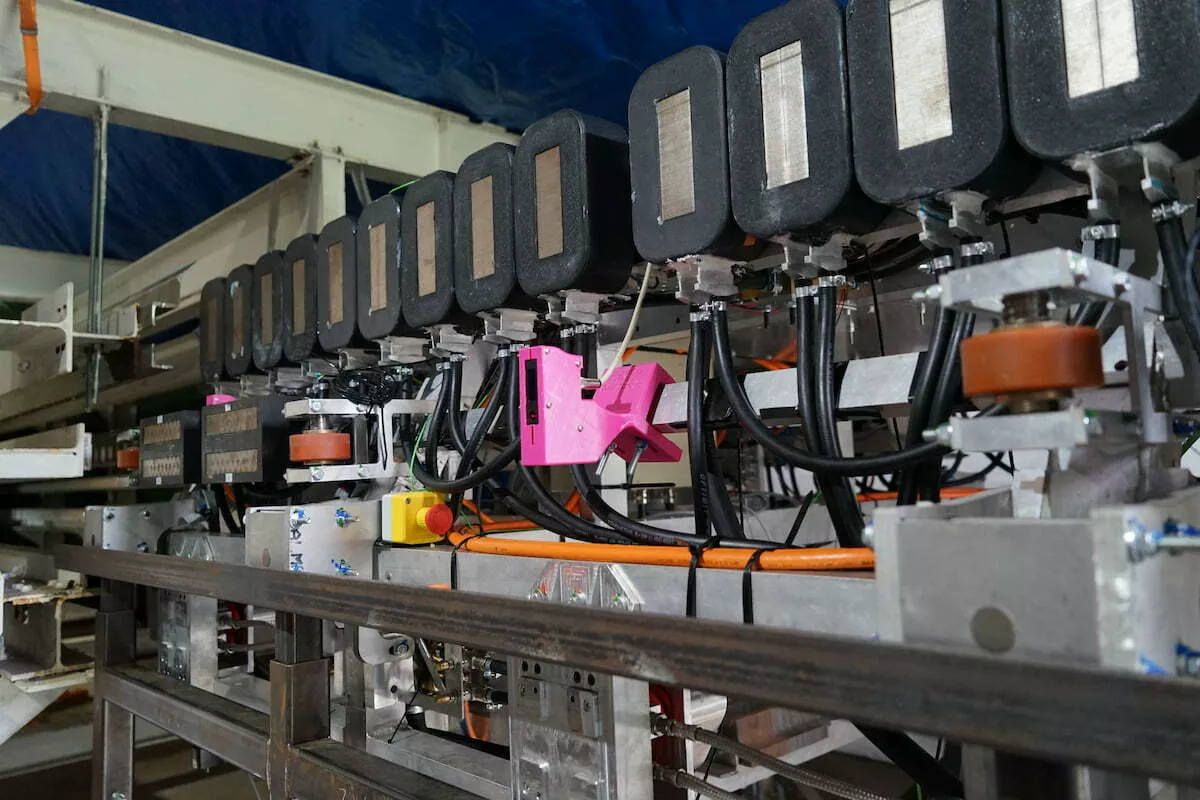
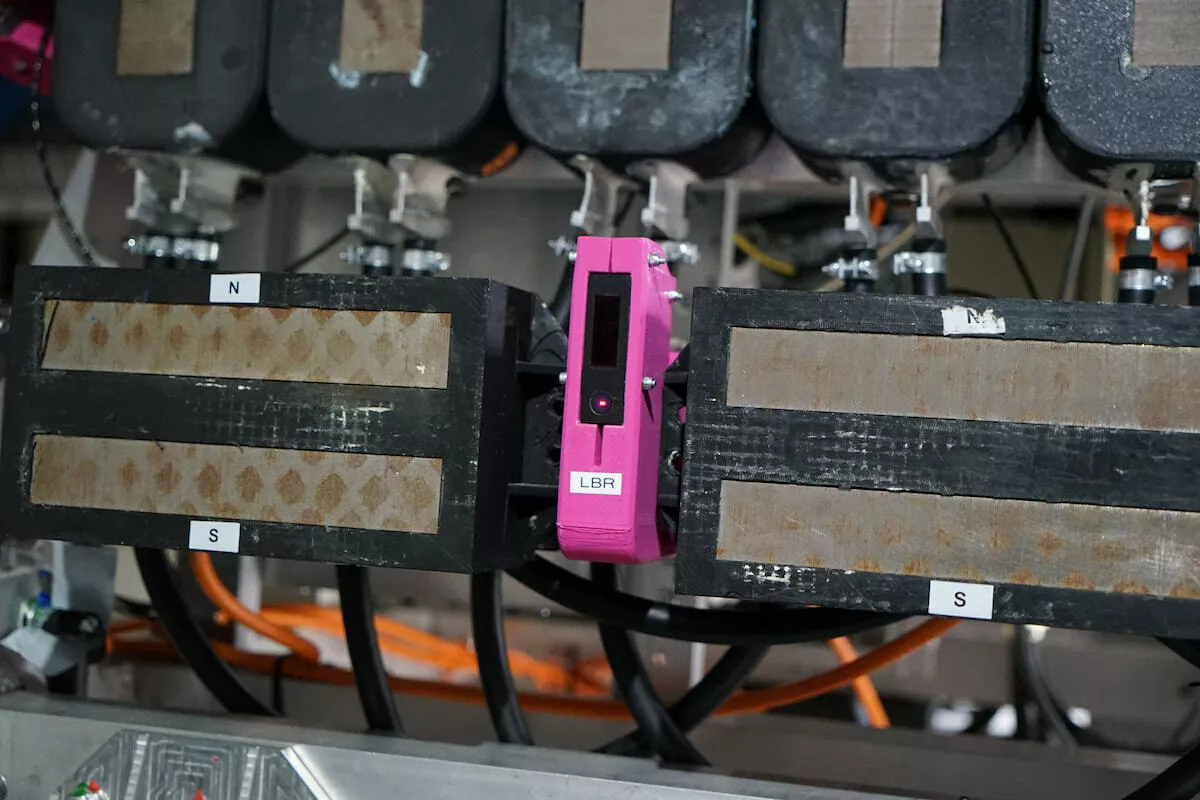
The laser sensors were installed vertically between the Hybrid Electromagnetic Suspension (HEMS) and horizontally between the Electromagnetic Suspension (EMS). Delft Hyperloop first tested the sensors with the software advised in the manual. Afterwards, they integrated and validated the sensors within their embedded systems infrastructure using automation software and Beckhoff EL6021 hardware.
Results
The sensors proved capable of keeping up with the fast control cycles required in Delft Hyperloop’s highly dynamic system. Even at relatively low baud rates, the team was pleased with the sensor performance.
During testing, the team observed occasional framing errors in request mode, caused by the surrounding infrastructure. Because the sensor data consists of four separate bytes with a built-in verification method, Delft Hyperloop was able to detect incorrect data and reject it before it could affect the control system.
This made the FDRF603 sensors a valuable part of the prototype’s minimum viable system.
About Delft Hyperloop X
Delft Hyperloop is a TU Delft Dream Team that works on the future of high-speed, sustainable transport. Team X is focusing strongly on scaling hyperloop technology for cargo transport, with the ambition to demonstrate that freight can be moved efficiently through a hyperloop system.
Goals of the 2026 team
Their latest prototype, THEIA II, was unveiled on 12 March 2026 at the Nieuwe Kerk in Delft. The vehicle is designed for endurance and integrates advanced magnetic levitation technology. Through public demonstrations, partner events and international competition, Delft Hyperloop X aims to bring hyperloop technology closer to real-world application.
Althen’s added value
Althen’s contribution goes beyond supplying sensors. The technical team supported Delft Hyperloop in assessing sensor issues and helped the team prevent similar problems in future testing.
As a sponsor, Althen supports ambitious student engineering and contributes to the development of next-generation mobility technology. For Delft Hyperloop, the FDRF603 laser triangulation sensors are essential for accurate vehicle positioning, stable levitation and reliable prototype performance.

Accurate distance measurement in a demanding test environment?
Please contact me to discuss the right sensor solution for your application.