Certified weighing solutions for automated systems
Bus compatible evaluation electronics for automated applications. Our amplifiers and (digital) indicators for high-tech weighing components have bus interfaces are in accordance with all relevant standards, including OIML, ATEX, IECEx, EAC, NTEP, and UL. The fieldbus interfaces provide versatile connectivity. You also save time, cost, and resources by combining and integrating them with existing systems.
For many years, Althen customers have benefited from innovative solutions in the field of digital signal processing, such as regulation and control technology, individually tailored to their specific needs. We offer a comprehensive product portfolio and thus cover the entire range of services - including the connection of sensors to bus systems.
You can also easily combine other sensors and measurement technologies from Althen with our automation technology. This is because they also comply with industry standards such as Profibus, Modbus, CANBus and EtherCAT or already include the bus interface.
Compatible
Our devices are compatible with all common fieldbus standards.
Flexible
With our fieldbus interfaces, you are flexible and perfectly connected.
Up-to-date
Our bus-compatible evaluation electronics comply with the latest industry standards for bus technology and can be used almost anywhere.
Integrable
Our evaluation electronics can be quickly and easily integrated into existing systems.
Digital automation instrumentation for every application: what sets us apart
We have the right measuring amplifiers and digital displays for every application. We are happy to support you in the selection of measuring amplifiers, digital displays and measurement data acquisition hardware. At Althen, we draw on more than 45 years of experience to offer you the optimum solution, customised to your requirements. This also includes customised solutions for digital signal processing as a complete package. Do you have any questions? We are here to help you!
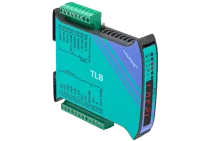
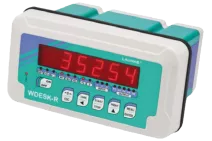
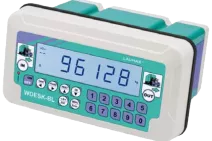
Weighing indicators are devices that are used in conjunction with scales to measure and display the weight of objects or substances. They are an essential component of weighing systems. The main function of a weighing indicator is to record and display the weight placed on the scale. Laumas weighing indicators have additional functions such as data logging, statistical functions, communication interfaces for connection to computer systems or networks and programmable settings for specific application requirements. For use in industrial environments, many weighing indicators have robust designs that can withstand dust, moisture and other environmental influences.
Feel free to contact our engineers.
How can we help you with your application?
We offer standard amplifiers and indicators but can also help you with a customized design or a complete measurement solution.
How we select the right automation technology for you
There are some important aspects to consider when selecting the right components for digital signal processing, in addition to the standards already mentioned such as OIML, ATEX, IECEx, EAC, NTEP and UL. Here are some other important considerations:
Signal processing requirements: first, the specific signal processing requirements, including the required data rate, resolution, accuracy and dynamic range must be clarified.
Compatibility and interoperability: Ensure that the selected components are compatible with other systems and devices in your system or network, especially when it comes to data exchange over different communication protocols.
Performance and scalability: Consider the performance and scalability of the selected components to ensure that they can meet the requirements of your system and expand as needed.
Reliability and robustness: Select components that are robust and reliable, especially if they are to be used in environments with extreme conditions such as high temperatures, humidity or vibrations.
Cost: Consider the cost of the selected components, including acquisition, implementation and operating costs, as well as potential savings from improved performance or reliability.
Security: Consider security aspects such as data security, access control and privacy, especially if the signal processing components handle sensitive or confidential information.
Future-proofing and technology trends: Consider future developments and trends in signal processing technology to ensure that the selected components remain relevant and compatible in the long term.
Considering these aspects can ensure that you select the right components for your digital signal processing application, that they meet your requirements and can be seamlessly integrated into your system. Need help with your selection? Get in touch with us!
Frequently asked questions about Digital automation instrumentation
Answers to the most important technical Questions
What is a measurement amplifier with a bus interface?
A measurement amplifier with a bus interface acquires the typically very small analogue output signal from a load cell or strain-gauge-based sensor, conditions and amplifies the signal, and converts it into a digital measurement value. In this type of application, the device functions as a load cell amplifier, strain gauge amplifier and signal conditioner. The digital measurement value can then be transmitted directly to a PLC, industrial PC or other automation system via an industrial bus or communication interface.
Which sensors can be connected to the measurement amplifiers?
The devices in this product group are primarily designed for load cells and other strain-gauge-based sensors with an mV/V output. These include force transducers and custom strain-gauge-based transducers. The sensor input signal, sensitivity and excitation requirements must be compatible with the respective load cell or strain gauge amplifier.
Depending on the model, serial interfaces such as RS232 and RS485 are available, as well as industrial communication systems including PROFIBUS DP, DeviceNet, CANopen, PROFINET IO, EtherNet/IP, Ethernet TCP/IP and Modbus TCP. RS485 also commonly supports Modbus RTU or the Laumas ASCII protocol.
Can existing analogue load cells be converted for digital communication?
Yes. Digital load cell transmitters, such as the LCB, are designed for this purpose. The analogue mV/V signal from an existing load cell is digitised close to the sensor and then transmitted via a digital interface. This often allows existing analogue load cells to remain in use when a machine or system is upgraded to modern digital communication.
What are the advantages of digitising the signal directly at the load cell?
When the load cell signal is digitised close to the sensor, the sensitive analogue mV/V signal only needs to travel over a short distance. Further transmission then takes place digitally via the fieldbus. This is particularly useful in larger installations, with longer cable runs, or when existing weighing systems are being upgraded for digital communication.
Can multiple load cells be connected to one measurement amplifier?
Yes, depending on the model. In addition to single-channel devices, multi-channel load cell amplifiers are available. The TLB4, for example, has four independent measurement channels, while the TLM8 series provides eight independent evaluation channels. Multi-channel systems can measure not only the total weight but also evaluate the signals from individual load cells separately, providing additional diagnostic possibilities.
Why are multiple independent measurement channels useful in weighing systems?
In a conventional weighing system, multiple load cells are often connected in series before reaching the evaluation electronics. With a multichannel measurement amplifier, however, the signals from the individual load cells can be recorded separately.
This makes it possible, for example, to monitor load distribution and the operation of individual load cells. Faults or unusual loads can thus be detected more easily.
Can measurement values be output digitally and analogue at the same time?
Yes, depending on the measurement amplifier. Various models provide an analogue output in addition to digital communication, for example 0–10 V or 0/4–20 mA. This allows the same measurement value to be transmitted digitally to the control system via a fieldbus while simultaneously being made available to other components as a conventional analogue standard signal.
OIML stands for the International Organization of Legal Metrology. Its recommendations define requirements for measuring instruments that are relevant, among other things, to weighing systems used for legal metrology. However, the product category alone does not determine whether an application is approved for legal-for-trade weighing. The specific OIML approval of the device must be checked, as well as whether the complete scale or weighing system meets the applicable legal requirements.
Are measurement amplifiers suitable for high-speed weighing and automation processes?
Yes. Various measurement amplifiers are designed for high-speed weighing and industrial automation. The LCB, for example, can calculate up to 500 weight values per second. With fast industrial networks such as PROFINET, EtherNet/IP or EtherCAT, measurement data can also be transmitted at high update rates. The speed actually required depends on the application. Static vessel weighing, for example, has different requirements from fast dosing, sorting or filling processes.
Can measurement amplifiers be connected directly to a PLC?
Yes. Direct communication with a PLC is one of the main applications of this product group. Depending on the control system, protocols such as Modbus RTU, PROFIBUS DP, PROFINET IO, EtherNet/IP, EtherCAT or another available communication protocol can be used. When selecting a measurement amplifier, it is therefore important to determine at an early stage which interface is supported by the existing PLC or automation system.
What advantages do digital measurement amplifiers offer over purely analogue amplifiers?
Digital measurement amplifiers combine signal conditioning and A/D conversion with direct communication to the automation system. Depending on the device, they can transmit not only measurement values but also status information, diagnostic data and device settings. This makes it easier to integrate multiple measurement amplifiers or load cell signal conditioners into networked machines and production systems.
How are measurement amplifiers configured and calibrated?
Configuration depends on the specific model. Depending on the device, it can be carried out using operating buttons, a serial interface or PC software. The LCB, for example, provides a Micro-USB connection with dedicated configuration software. Parameters such as calibration, filters, inputs and outputs, and communication settings can be configured. Correct calibration of the measurement chain is particularly important for accurate load cell measurement.
Which housing and mounting design is suitable for my application?
The appropriate design depends on the installation location and environmental conditions. For control cabinets, compact load cell amplifiers and measurement amplifiers are available for DIN-rail or back-panel mounting. Other measurement amplifiers can be installed directly on or close to the load cell. For harsh industrial environments, versions with suitably protected enclosures are available. The LCB, for example, features a robust IP67 enclosure and can be mounted directly on the load cell body or on a wall.