Home
  1. Althen Sensors
  2. Sensors
  3. Linear position sensors

Linear position sensors

High-precision linear position sensors for accurate displacement measurement

Linear position sensors are designed to measure the distance between an object and a reference point, as well as detect precise changes in position. They work by converting mechanical displacement into an electrical output signal that can be processed and analyzed.

A variety of measurement principles—such as inductive, magnetostrictive, or potentiometric technologies—can be used to ensure accurate and reliable results across a wide range of applications.

Linear position sensors and measurement systems are widely used in both industrial environments and scientific laboratories. They are available in various designs, configurations, and interface options, allowing seamless integration into diverse systems and applications with different technical requirements.

  • independent and free consultation
  • customisable design
  • integrable into your systems

Discover our range of linear position sensors

Products

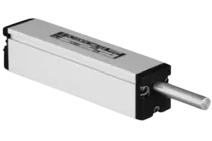
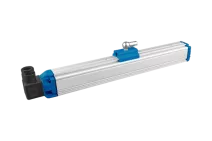
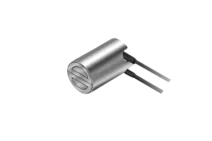
Linear potentiometers

Linear potentiometers

  • Measurement range 10 mm to 1.000 mm
  • Compact in size and light in weight
  • Conductive plastic or wirewound
View products
Linear magnetic hall effect sensors

Linear magnetic Hall sensors

  • Measurement range 14 mm to 34 mm
  • Contactless position measurement
  • Excellent for measuring displacement
View products
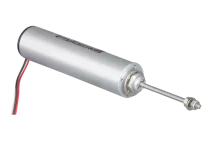
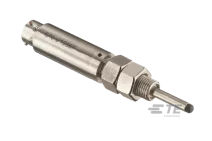
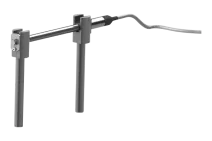
Linear inductive position sensors

Linear inductive postion sensors

  • Measuring range 0 to 800 mm
  • Stable under temperature fluctuations
  • Perfect for hydraulics / pneumatics
View products
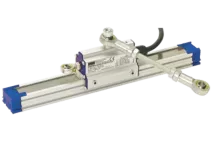
Incremental linear encoders

Incremental linear encoders

  • Measuring range 50 mm to 2.000 mm
  • Position feedback in electrical signals
  • Up to 2,5 µm resolution
View products

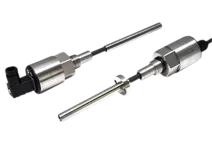
Magnetostrictive linear position sensors

  • Measuring range 100 mm to 2.000 mm
  • Temperature, shock & vibration resistant
  • Wear- and maintenance-free
View products
LVDT sensors

LVDT sensors

  • Measuring range 0.13 mm to 508 mm
  • Excellent linearity & infinite resolution
  • High durability and reliability
View products
Customised Linear position sensors

Our offer to you

We offer standard linear position sensors but can also help you with a customized design or a complete measurement solution.

Find out more now

Simply send us your contact details and tell us what you are looking for. Our sales specialists will get in touch with you to help you explore your options

  • Fast processing
  • Cost-effective
  • Customised to your needs
  • Always the right solution
Terms and conditions 
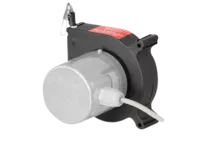
Draw wire sensors

Draw-wire sensors

  • Measuring range 0 to 50.000 mm
  • Highly flexible steel measuring cable
  • Up to 0.01 mm accuracy
View products
Eddy current sensors

Eddy current sensors

  • Measuring range 0,25 mm to 60 mm
  • Non-contacting measurement technology
  • Perfect for harsh environment application
View products
Capacitive position sensors

Capacitive position sensors

  • Measuring range 0 to 12.7 mm
  • Highly accurate and stable
  • Extremely low temperature drift
View products
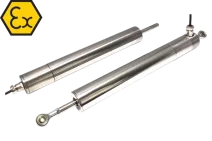
Intrinsically safe position sensors

Intrinsically safe position sensors

  • Measurement range 0 to 800 mm
  • For hazardous / explosive environments
  • Inductive measuring to prevent wear
View products
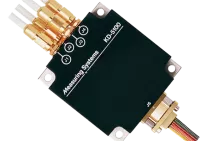
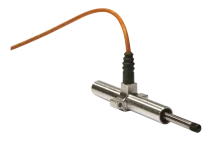
Fiber optic position sensors

Fiber optic position sensors

  • Measuring range 0 to 25 mm
  • High precision in demanding environments
View products
Fiber optic extensometers

Fiber optic extensometers

  • Measuring range ±1.000 µε to ±2.500 µε
  • Maintenance free, no drifting over time
View products

Understanding Linear Position Sensors

Linear position sensors are devices that measure the displacement or position of an object in a straight line. These sensors convert mechanical motion into an electrical signal, allowing for precise monitoring and control in a wide array of industrial processes. They find applications in sectors such as automotive, aerospace, manufacturing, and robotics.

The advantages of our linear position sensors for you:

  • High protection class (up to IP69k)
  • Resistant against environmental influences
  • Long service life
  • Easy to use
  • Temperature stable
  • Contactless measurement possible (induction sensors)
  • Models with ATEX & IECEx or CSA certification available for use in demanding environment

Possible applications

Althen linear position measurement technology

We offer linear position measurement technology for a wide range of applications that require accurate travel, distance, or position monitoring. Our portfolio includes both standard and specialised sensor solutions, making it easy to select the right sensor for your application.

Our linear position sensor range includes

  • Conventional inductive sensors and displacement sensors
  • Specialised sensors for OEM integration
  • Advanced contactless eddy current sensors

The right technology for every application

Althen linear position sensors are based on different physical measurement principles. This allows us to offer the ideal solution for your installation and performance requirements.

Our sensor range can be divided into:

  • Contacting position sensors
  • Non-contacting position sensors

Intrinsically safe linear position sensors (ATEX / IECEx)

We also supply intrinsically safe EX position sensors for hazardous areas, including:

  • Ex II 1G
  • Ex II 1GD
  • Ex i / II M1 / 1GD

These sensors are available in various configurations to match your industry requirements.

Built for heavy duty use in machinery and automation

Machine equipment often requires sensors that are reliable, durable, and accurate. Our linear and rotary sensors are designed for heavy duty environments and help reduce maintenance costs. They can also support your automation and digitalisation programmes.

Key benefits

  • Long service life
  • Exceptional repeatability
  • High linearity
  • Customisable lengths for different applications

Whether you work with small-scale production or high-volume manufacturing, reliable equipment is key to maintaining consistent quality. Our sensors help you measure with confidence, every day.

  • Cutting-edge technology
    Incorporating the latest technological advancements in sensor design.
  • Durable and robust designs
    Resistance to extreme temperatures, vibration, and exposure to contaminants.
  • Customization and tailored solutions
    Adapting sensor specifications, materials, and form factors to specific customer requirements.

Contacting or non-contacting linear position sensors?
 

Choosing between contacting and non-contacting linear position sensors depends on the specific requirements of the application, including factors such as precision, environmental conditions, and the durability needed for long-term use. Contacting sensors are often used in applications where cost is a critical factor, and physical contact is permissible, while non-contacting sensors are preferred for high-precision applications and environments where wear and tear need to be minimized.

Contacting linear position sensors

They usually involve a direct mechanical connection between the sensor and the moving part. Potentiometric sensors are a common type of contacting linear position sensor. They use a resistive element and a wiper that makes physical contact with the surface. As the object moves, the wiper slides along the resistive element, creating a variable voltage output.

Advantages 

  • Simple design and construction;
  • Generally lower cost;
  • Suitable for applications where physical contact is permissible. 

Disadvantages

  • Wear and tear due to mechanical contact can lead to a limited lifespan;
  • Prone to inaccuracies and signal degradation over time;
  • Not ideal for applications where non-contact measurement is essential.


Linear variable differential transformers (LVDT sensors)
Within their specified measurement range, LVDT sensors provide excellent linearity. They are capable of detecting very small changes in position and have virtually unlimited resolution. As a result, LVDT sensors are also suitable for measuring high accelerations and high measurement cycles.

Linear inductive position sensors
Linear inductive position sensors are durable, long-lived, and especially stable under temperature fluctuations. That means they are ideal for measuring linear travel in almost any industrial setting – especially with hydraulic or pneumatic applications.

Draw-wire sensors
Draw-wire sensors (also called string pot displacement sensors) can measure distances at up to 0.01 mm accuracy. They measure the position and movement of an object by means of a flexible steel cable that is fed from a spring-loaded spool. The linear movement at the end of the cable is thus transformed into a rotational movement.

Linear potentiometers
Linear-motion potentiometers (potentiometric sensors and displacement sensors) are based on electrical resistance. Their resistance can be altered mechanically (by rotation or transposition). These sensors are primarily used as continuously adjustable voltage dividers. Althen linear potentiometers are highly compact and lightweight, and they come in various configurations.

Hall effect sensors
Sensors based on the Hall effect are used to measure the strength of magnetic fields. Their primary applications are in longevity and stress testing as well as for measuring magnetic fields or the thickness of layers. Our Hall sensors are also available in several modified versions for special requirements.


The future of linear position sensors
 

As technology continues to advance, the demand for accurate and reliable linear position sensors will keep growing. Althen Sensors & Controls supports this development with sensor solutions designed for precision, efficiency, and long-term reliability. From automotive and manufacturing to aerospace applications, linear position sensors play an important role in the ongoing evolution of industrial automation and control systems.

 

Position sensors in action

Discover our projects
Discover more projects & applications
2d laser scanner

Position sensors for machines and plants

Machine equipment requires heavy-duty sensors. The sensors must be reliable, durable and precise. Our linear and rotary sensors help you save (maintenance) costs and can be part of your automation and digitalisation programme. Regardless of whether it is a small batch or mass production, manufacturing quality products requires quality equipment. Our sensors are designed for high performance applications and offer you long life, exceptional repeatability, high straightness and customised lengths for various applications. Looking for a contactless solution for accurate position measurement? 

Elevate your operations

Contact us today and discover the difference in accuracy, reliability, and innovation.

Robert van der Elst

Technical Sales

Our services

Frequently asked questions about Linear position sensors

Answers to the most important technical Questions

What measuring ranges are available for displacement sensors and transducers?

The available measuring ranges of displacement sensors and transducers depend on the measurement principle and the respective product series. Althen offers solutions for very small linear movements in the millimeter range up to long measuring distances of several meters. For short and precise measuring ranges, LVDT displacement transducers, inductive displacement sensors, Hall sensors, or linear potentiometers are suitable, for example. For larger strokes and long linear movements, draw-wire sensors or magnetostrictive position sensors are often used. Althen draw-wire sensors enable measuring lengths of up to 50 m, while other displacement sensors, depending on the design, cover measuring ranges from a few millimeters to several hundred millimeters or more. The appropriate measuring length depends on the application, installation space, accuracy requirements, environmental conditions, and desired output signal.

What resolutions are available for displacement sensors and transducers?

The available resolutions of displacement sensors and transducers depend heavily on the measurement principle, measuring range, output signal, and evaluation electronics used. LVDT displacement transducers can detect very small changes in displacement and offer virtually infinite resolution. Depending on the design, Althen linear incremental encoders achieve resolutions down to 2.5 µm. Draw-wire sensors are available with long measuring ranges of up to 50,000 mm; Althen specifies an accuracy of up to 0.01 mm for these. Other measurement principles such as inductive, magnetostrictive, Hall-effect, eddy-current, or potentiometric displacement sensors offer different resolutions depending on the product series and are suitable for various requirements regarding precision, robustness, and measuring range. For the correct selection, resolution and accuracy should always be considered together. Measuring range, repeatability, linearity, signal processing, installation, and environmental conditions are also decisive.

What temperature ranges are displacement sensors and transducers suitable for?

Depending on the measurement principle and product series, displacement sensors and transducers are suitable for different temperature ranges. Many industrial versions are designed for harsh environments and offer high temperature resistance, robust housings, protection ratings up to IP69K, and resistance to environmental influences. The specific temperature range must always be checked in the data sheet of the respective sensor. PR-series LVDT displacement transducers, for example, are designed for -40 °C to +125 °C, with higher temperatures available as an option. Inductive displacement transducers offer particularly stable temperature behavior, while magnetostrictive position sensors are largely insensitive to temperature, shock, vibration, and contamination. In addition to ambient temperature, temperature fluctuations, installation conditions, protection rating, humidity, vibrations, and the required measurement accuracy should also be considered when selecting a sensor. We will be happy to help you select a suitable displacement sensor or transducer for your application.

How are displacement sensors and transducers evaluated?

Displacement sensors and transducers are evaluated differently depending on the measurement principle and output signal. They often provide an analog signal, for example resistance, 0–10 V, 0.5–4.5 V, or 4–20 mA. These signals can be processed by a control system, display, measuring amplifier, or data acquisition system. Other displacement sensors provide digital or incremental signals, for example pulses, SSI, CANopen, or other interfaces. Incremental sensors detect changes in position and usually require referencing, while absolute sensors can provide the position directly after power-up. For reliable evaluation, the appropriate output signal, correct supply voltage, suitable signal conditioning, clean wiring, and stable mechanical installation are essential.

When do displacement sensors and transducers need to be recalibrated?

Displacement sensors and transducers should be recalibrated when consistently high measurement accuracy must be demonstrated or when operating conditions may affect the measurement signal. Typical reasons include regular quality or measuring-equipment monitoring, intensive use, strong vibrations, temperature changes, mechanical loads, repairs, or component replacement. A fixed calibration interval depends on the sensor type, application, required accuracy, and internal quality specifications. In many industrial applications, an annual inspection is recommended; shorter intervals may be appropriate for safety-critical test benches, high levels of use, or tight tolerances. The measurement chain should also be checked and, if necessary, recalibrated after a new installation, noticeable measurement deviations, or changes to the mechanics, cables, signal conditioning, or control system. Further information on calibration can be found on our website.

What is the service life of displacement sensors and transducers?

The service life of displacement sensors and transducers depends strongly on the measurement principle, mechanical loading, and environmental conditions. Althen offers displacement sensors with high robustness, protection ratings up to IP69K, resistance to environmental influences, and long service life. Contactless sensors such as LVDT, inductive, magnetostrictive, Hall-effect, or eddy-current sensors are generally particularly durable because there is no mechanical sliding contact subject to wear. Thanks to their contactless design, LVDT sensors minimize wear and are therefore well suited to continuous operation and demanding environments. Inductive displacement transducers are also contactless, highly wear-resistant, robust, and durable. For contact-based sensors such as linear potentiometers, service life is usually specified in measurement cycles. For applications involving frequent movement, Althen lists models with more than 50 million measurement cycles; some versions achieve up to 100 million cycles, for example LPC, SLPT, or ELPH. The actual number of years a sensor lasts depends on factors such as movement frequency, stroke, speed, lateral forces, temperature, humidity, vibrations, protection rating, and installation. We will be happy to help you select a suitable displacement sensor or transducer — contact us!