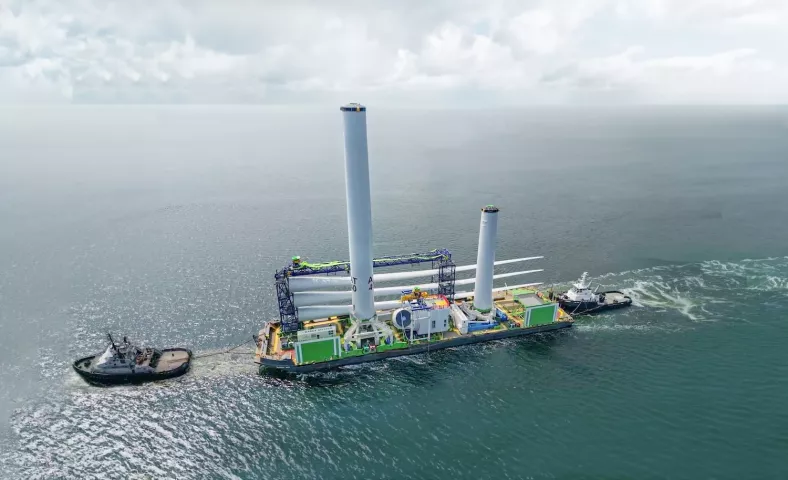
Weighing 1.680.000 kg. wind turbines with load pins
Explore our portfolio of weighing sensors and load cells, weighing electronics, and force transducers, all compliant with OIML standards. Combine hardware, software, and fieldbus technologies to optimize weighing processes. Benefit from high accuracy, flexible interfaces, and custom options for seamless integration into your application.
Technology at the highest level
We offer standard weighing sensors and load cells but can also help you with a customized design or a complete measurement solution.
We offer a broad selection of load cells, weighing electronics, and accessories in accordance with the standards of the OIML (International Organization of Legal Metrology). Combine our hardware and software solutions including bus technology to successfully and effectively automate your industrial weighing processes.
Our load cells and weight sensors can be used to build weighing stations and other systems for weighing goods. They transform a load or weight into an electronic signal. This output signal can take the form of a change in current, frequency, or voltage, depending on the type of load cell and its configuration. Every sensor is made from a durable material such as steel and fitted with one or more strain gauges. When force is applied to the strain gauge, it transmits a low electrical current. Weighing sensors can be pressure or tension based, or even bidirectional.
Our load cells consist of a measuring element with one or more strain gauges. They support parallel configurations for signal summation. Standard strain gauge amplifiers can be used to amplify and evaluate load cell signals. Custom measurement systems and fully integrated solutions are available on request.
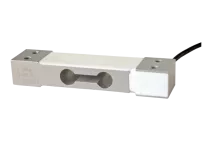
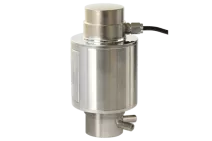
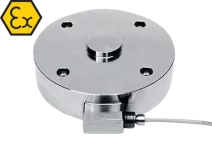
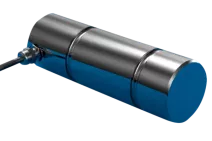
Load cells form a special section of our weighing sensor portfolio are used in weighing systems, such as scales or other devices for weighing goods. Unlike force sensors, the measurements are given in grams, kilograms, or tons. Typical load cells are based on bending or shear beams. However, you can also use low-profile force sensors or cylindrical load cells to construct weighing systems.
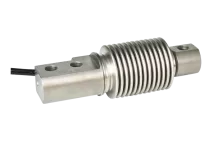
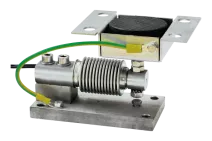
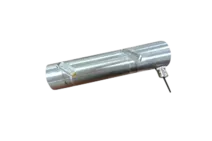
Our wide range of load cells for measurement ranges from 50 grams to 25 tons, as well as load pins for up to 1,500 tons. Use our simple, cost-effective load cells for OEM applications. For highly demanding applications, our high-quality submersible stainless steel load cells might be the right choice.
You are designing a new product or machine, and somewhere a force or weight must be measured. The standard product range of force sensors and load cells don't offer a suitable solution. What now?
Then you probably are looking for a customized load cell that exactly fits your machine or application. By strategically looking at mechanical components in your application, we can change passive components into active sensors. Our custom load cells for OEM or Test & Measurement applications in which force, reaction torque, or weight must be measured based on strain gauge technology.
Especially in case of dynamic loads, you should make sure the measurement range of your load cell isn’t too small. That way you avoid overloading them at peak loads. For instance when applying weight dynamically. Generally speaking, our load cells are very precise, so that you can use double or triple measurement ranges.
When using external strain gauge amplifiers, scale your measurement signal in such a way that only the desired range is given as an output. This lets you compensate for large offset values such as the static weight of a silo or platform.
Althen Sensors & Controls invites you to explore the future of weight measurement technology. Elevate your precision, streamline processes, and unlock new possibilities with our innovative weighing sensors and load cells. Contact us today to discuss how we can customize our solutions to meet your unique requirements.
Answers to the most important technical Questions
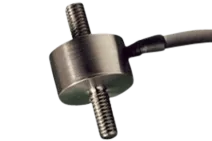
Althen load cells cover a very wide range of weighing applications, from small forces and weights in the gram range to industrial heavy-duty applications involving loads of several hundred tonnes. Miniature load cells are suitable for very small measuring ranges and applications with limited installation space, while single-point load cells are commonly used in platform and bench scales.
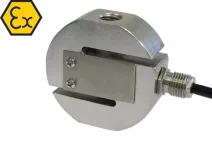
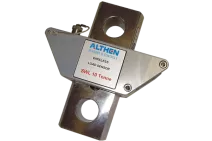
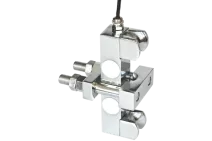
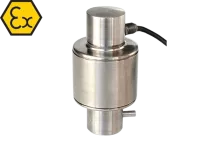
Bending beam, shear beam, and S-type load cells cover medium to higher load ranges and are used in applications such as dosing systems, conveyor systems, tank weighing, test benches, and industrial weighing systems. For high and very high loads, cylindrical load cells, low-profile load cells, load pins, and load shackles are available for applications including heavy-duty weighing, silo weighing, crane weighing, offshore applications, test benches, and structural monitoring.
The required weighing range should always be selected with sufficient capacity above the maximum expected load. In addition to the rated load, load peaks, dynamic loading, force application, installation conditions, environmental conditions, protection rating, accuracy requirements, and calibration should also be considered.
Althen can help select the right load cell or complete weighing system for the required load range.
The accuracy of load cells and weighing systems depends on the application, sensor design, measuring range, and accuracy class. Available options range from robust industrial load cells to high-precision sensors for test benches, process monitoring, laboratory applications, and quality-critical measurements.
Actual measurement accuracy depends not only on the load cell itself, but on the entire measurement chain. Factors such as force application, installation, load distribution, temperature, environmental conditions, signal conditioning, display or data acquisition, and calibration all play a role. Side loads, off-center loading, mechanical stress, vibration, and unsuitable installation conditions can significantly reduce accuracy.
For applications with demanding accuracy requirements, the complete measurement chain should be configured and calibrated for the specific application and actual operating conditions. Althen also offers complete weighing systems with suitable signal conditioning, displays, measurement electronics, and calibration.
Althen offers several calibration options for load cells. New load cells can be calibrated for the intended application and supplied with a calibration certificate. Existing sensors and measurement systems can also be returned to Althen for inspection, adjustment, and recalibration.
Both factory calibration and traceable calibration are available. Any deviations are checked, adjustments are made where necessary, and the results are documented in a calibration certificate. In addition to individual load cells, complete measurement chains can be calibrated, including the load cell, measuring amplifier, display, measurement electronics, and data acquisition system.
Calibration is particularly important for quality-critical measurements, test benches, process monitoring, safety-critical applications, and situations where measurement results need to remain documented and comparable over time. Recalibration is also recommended after overload, shock loading, modifications, repairs, component replacement, or unexpected measurement deviations.
Legal verification for trade use is different from technical calibration. Whether an officially verified or legally compliant weighing solution is required depends on the application and applicable regulations, for example when weighing results are used for commercial transactions. For industrial force and weight measurement, suitable calibration with documented traceability is often sufficient.
Althen can help determine the most appropriate calibration method and suitable calibration intervals for the application.
Load cells can be connected and evaluated in several ways, depending on the application. Conventional load cells typically provide a strain-gauge bridge signal that is processed using a suitable measuring amplifier or signal conditioning electronics. The signal can then be amplified, filtered, digitized, displayed, stored, or transmitted to a control system.
For simple weighing systems, digital displays or weighing terminals can show the measured value directly and, depending on the model, provide functions such as calibration, limit settings, relay outputs, or serial interfaces. For integration into machine and process control systems, analog outputs such as voltage or current are available, together with digital interfaces and fieldbus options such as RS232, RS485, Modbus RTU, Modbus TCP, Profibus, and Ethernet via suitable interface modules.
For test benches, dynamic measurements, or multi-channel systems, load cells can be connected to measuring amplifiers, data loggers, or DAQ systems. Wireless solutions are also available for mobile, hard-to-reach, or moving applications. In specialist environments, intrinsically safe or fiber-optic signal processing systems may also be used.
The right solution depends on the measuring range, required accuracy, dynamic response, cable length, environmental conditions, number of measuring points, display requirements, control-system integration, and calibration requirements.
Load cells should be calibrated at regular intervals. How often recalibration is needed depends on the application, required measurement accuracy, load profile, and environmental conditions.
Recalibration is particularly recommended after overload, shock loading, mechanical modifications, repairs, system changes, component replacement, unexpected measurement deviations, or when the load cell is used under demanding conditions. Temperature changes, moisture, contamination, vibration, and aggressive media can also affect the long-term stability of the measurement system.
For quality-critical applications, test benches, process monitoring, or safety-critical measurements, a defined calibration interval is recommended. An annual inspection or calibration is common, although shorter intervals may be appropriate for heavily used systems or applications with demanding accuracy requirements.
Althen can help determine suitable calibration intervals and provides calibration and testing services for individual load cells and complete measurement chains.
The service life of a load cell depends on the application, load profile, installation conditions, and environment. Important factors include the available safety margin relative to the rated load, load peaks, dynamic loading, force application, side loads, temperature, moisture, dust, chemical exposure, and mechanical installation.
When a load cell is operated within its specified limits, installed correctly, and inspected or calibrated regularly, it can provide reliable service for many years. Factors that can shorten service life include overload, shock loading, off-center force application, mechanical stress, an unsuitable protection rating, and harsh environmental conditions.
To maximize service life, a load cell should not be operated continuously near the upper limit of its measuring range. Sufficient capacity above the expected load, an appropriate protection rating, stable low-stress installation, and the correct choice of accessories, signal conditioning, and calibration all contribute to long-term reliability.
Yes. In addition to standard load cells, Althen offers custom load cells, modified standard designs, and fully customized solutions. Depending on the application, the measuring range, design, dimensions, mounting, force application, material, protection rating, cable configuration, connectors, output signal, and calibration can all be adapted.
Customization is particularly useful where installation space is limited, environmental conditions are demanding, high load peaks may occur, special mounting is required, or existing machine and system components need to be integrated into the measurement setup. Depending on the requirements, wireless, intrinsically safe, and fiber-optic solutions can also be considered.
Althen can support the selection, design, and integration of the right load cell, from a modified standard version to a fully customized measurement solution including signal conditioning, calibration, and accessories.
Hier heb ik technisch niets veranderd; alleen custom load cells toegevoegd omdat dat aantoonbaar gezocht wordt.