Measuring force on trawl nets
With Althen’s force sensors, you can accurately measure static and dynamic tensile and compressive forces under virtually all conditions. From miniature and ring sensors to bending beam load cells, we offer a wide range of solutions based on reliable strain gauge technology. Our team is happy to help you select the right sensor for your application.
Product categories
We offer standard force sensors, but can also help you with a customised design or a complete measurement solution
When you choose force sensors from Althen, you benefit from various advantages.
An external Amplifier allows you to adapt the Force Sensor or Load Cell to your requirements. The Amplifier converts the measuring signal of the strain gauges into an industry-standard voltage or current signal. In addition, you can use it to connect several sensors in parallel or to balance a static zero point.
Strain Gauge Amplifiers are available in three standard versions:
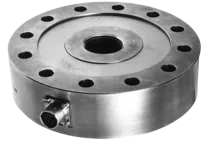
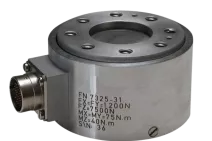
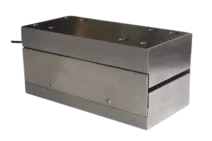
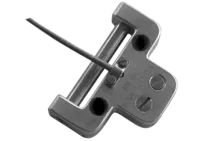
We offer you an extensive range of force sensors. The strain gauge structure can be installed in a variety of forms - depending on the force range and application requirements. An exemplary selection:
Force sensors are advanced devices that detect and measure the magnitude and direction of force applied to them. These sensors come in various types, including load cells, strain gauges, piezoelectric sensors, and more, each tailored to specific requirements. Force sensors can convert a force into an electrical signal. Their operation relies on measuring strain in a precision metal structure using foil strain gauges bonded to the surface of the metal. The structure can be built in a wide variety of forms depending on the force range and the application requirements. Our Load Cells range from 1 mN up to 10 Mega Newton.
We offer a wide range of force sensors. The strain gauge structure can be installed in a variety of shapes, depending on the force range and application requirements. There are, for example, annular or cylindrical force gauges, one-component and multi-component force sensors or special force transducers. Our sensors cover nominal forces from 10 N to 10 MN. The larger the nominal force, the larger load cells are needed. The nominal force refers to the maximum load of a sensor.Thanks to our own development and manufacturing department, there are almost no limits. Upon request, we also combine different measuring channels for you - for example with other physical parameters such as pressure or displacement measurement. We integrate limit contacts and alarm devices for you or build our sensors into housings and control cabinets.
We have the perfect force sensor for every application. We are happy to support you in your product selection. At Althen, we draw on more than 45 years of experience to offer you the optimum solution, customised to your requirements. This also includes customised force transducers as a complete package. The advantage for you is that we are not tied to one manufacturer and can advise you independently. On request, we can customise the measuring system exactly to your needs. Do you have any questions? We are glad to help you!
Force sensors consist of a spring body made of metal, for example a steel cylinder. When a force acts on this spring body, its surface deforms elastically. Its task is to convert the forces to be measured into strains as often as possible in a repeatable manner. The actual sensor element is the strain gauges, which are attached to the spring body. The strain gauges record the mechanical deformation and convert it into an electrical output signal. As a rule, four strain gauges are installed - two expand when a force is applied, the other two are compressed. The four strain gauges are connected via a Wheatstone bridge circuit, which is supplied with an electrical voltage. If the resistances of the strain gauges differ, the output signal changes. This allows the applied force to be determined precisely.
The strain gauge measuring principle impresses with various properties:
When selecting a force sensor for a technical application, a number of criteria must be taken into account to ensure that the requirements of the application are met and that the most accurate and reliable measurement results are achieved. To do this, it is first important to understand the application in order to determine, for example, the required accuracy or the number of interfaces for the force sensor.
The following criteria, among others, must be determined during the selection process:
Answers to the most important technical questions
Depending on the design, force sensors and load cells are available with analogue or digital output signals. Many load cells use strain gauge technology and provide an mV/V signal, which can be converted into standard output signals using a measuring amplifier or signal conditioning electronics.
Depending on the model and application, outputs such as 0–10 V, ±10 V, 4–20 mA and digital interfaces are also available.
This allows the sensors to be integrated into test benches, machine control systems, data acquisition systems and industrial automation applications.
The accuracy of force sensors and load cells depends on the sensor type, measuring range, installation conditions and applied load. Depending on the model, they can be used for applications ranging from basic force monitoring to high-precision testing and development.
Key accuracy specifications include linearity, hysteresis, repeatability and crosstalk, as listed in the individual product data sheets. Many force sensors achieve accuracies of approximately ±0.1% to ±0.5% of full scale, while high-precision versions can achieve even lower deviations.
The appropriate sensor should be selected based on the measuring range, force direction, dynamic loading, environmental conditions, installation and required accuracy.
Depending on the application, different force sensors and load cells are suitable for measuring tension and compression forces. Miniature load cells are ideal for precise tension and compression measurements where installation space is very limited. Low profile load cells are well suited to compact test benches, load testing and fatigue testing, and are also available in bidirectional versions.
Cylindrical load cells are particularly suitable for robust industrial tension and compression measurements at high loads. Bending beam and shear beam load cells are commonly used for weighing, dosing and process applications. When forces need to be measured simultaneously in multiple directions, multi axis load cells are a suitable choice.
The most suitable sensor depends on the measuring range, force direction, available installation space, dynamic loading, required accuracy and environmental conditions. Althen can help select the appropriate force sensor or load cell for the application.
Deze versie is technisch trouw aan de Duitse inhoud en gebruikt tegelijk op een natuurlijke manier de belangrijke SEO-termen force sensor, load cell, tension, compression, miniature load cell, low profile load cell, cylindrical load cell, bending beam load cell, shear beam load cell en multi axis load cell.
The force sensor and load cell range covers a very wide measuring span, from 0.5 N up to 10,000 kN. The available rated capacities depend on the sensor design. Miniature load cells start at 2 N, while ring load cells are available up to 4 MN and cylindrical load cells up to 5 MN.
For applications requiring different measuring ranges or specific design requirements, custom force sensors and complete measurement solutions are also available.
The temperature range of force sensors depends on the sensor type, measuring range, and design. Many standard load cells have a compensated temperature range of -10 to +50 °C and an operating temperature range of -10 to +80 °C. For applications involving higher ambient temperatures, custom versions are also available. Certain ring load cells, for example, can be designed for compensated operation at temperatures up to +250 °C. Selecting the right sensor requires consideration of the operating temperature, temperature fluctuations, required accuracy, protection rating, installation conditions, and output signal.
The strain gauge measuring principle impresses with various properties:
- Accurate results thanks to precise calibration
- Compensation of unwanted influences through the Wheatstone bridge circuit
- Can be used under unfavourable environmental conditions
- Strain gauge sensors operate drift-free - this guarantees a long service life
- Simple reproduction of the spring bodies
The service life of force sensors and load cells depends on the application and is influenced mainly by the applied load, installation, environmental conditions and protection against overload. When the measuring range is selected correctly, the sensor is installed properly and operated within its specified limits, it is designed for long-term and reliable use.
Dynamic loading, vibration, temperature fluctuations, moisture, side loads and mechanical overload can all affect service life.
To maintain accurate measurement results over time, regular calibration is recommended, together with selecting a force sensor or load cell with a sufficient safety margin for the application.
Force sensors and load cells should be calibrated regularly to maintain accurate and traceable measurement results. Calibration is particularly important when a sensor is first put into service, after repairs or overloads, after extended periods of use, when measurement deviations are observed, and after changes to the sensor, cable, measuring amplifier or signal conditioning unit.
For quality-critical applications, test benches and production processes, periodic calibration at a defined interval is recommended. The appropriate calibration interval depends on the application, load, environmental conditions, accuracy requirements and internal quality procedures.
Althen also provides calibration services for force sensors and load cells.
Yes. Force sensors and load cells can be customised to meet specific application requirements. Depending on the application, the measuring range, design, dimensions, mechanical interface, force introduction, output signal, cable or connector configuration and protection rating can all be adapted. Custom sensors can also be integrated into existing measurement systems.
This makes customised force sensors suitable for applications with limited installation space, demanding environmental conditions or specific testing and production requirements. Althen can support the process from selecting the appropriate sensor to developing a complete customised measurement solution.
Need a custom solution? Contact us to discuss your application.