Home
  1. Althen Sensors
  2. Sensors
  3. Torque sensors

Torque sensors

Accurate torque measurement is critical in many industrial and R&D applications. Our torque sensor portfolio supports both static and dynamic measurements, from precision low-torque setups to high-load rotating systems. We offer static torque sensors based on strain gauge technology, as well as torque sensors for rotating shafts. These are designed for reliable measurements under real operating conditions. Applications range from robotics and automotive to marine, offshore and aerospace environments.

Solutions for dynamic and static torque measurement

With a measurement range from 0.01 nNm up to 10 kNm, our solutions deliver consistent performance across both low and high torque applications. This makes them suitable for testing, monitoring and control in demanding systems.

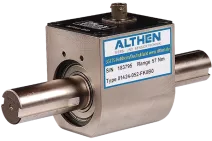
  • Rotating torque sensors, designed to provide accurate measurements of the force applied to a shaft or rotational component
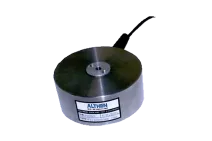
  • Reaction torque sensors, suitable for situations where there is no continuous rotation, but where it is necessary to measure the force applied to a shaft or other stationary rotating element
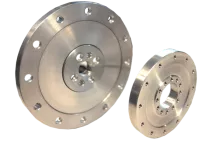
  • Multi axis force-torque sensors, combination measurement of force and torque in the same axis with minimum crosstalk
  • independent and free consultation
  • customized design
  • integrable into your systems

Dynamic & static torque monitoring

Products

Rotating torque sensors

Rotating torque sensors

  • Measuring range 0,01 to 27.000 Nm
  • Rotation speed of up to 30.000 rpm
  • Ideal for measuring dynamic torque
View products
Reaction torque sensors

Reaction torque sensors

  • Measuring range 0.01 to 50.000 Nm
  • Excellent non-linearity
  • Perfect for measuring static torque
View products
Multi axis force torque sensos

Multi axis force-torque sensors

  • Measuring range 50 N force & 2 Nm
  • Measures force & torque on the same axis
  • Provides user friendly outputs
View products
Customised Torque sensors

Our offer to you

We offer standard torque sensors but can also help you with a customized design or a complete measurement solution.

Find out more now

Simply send us your contact details and tell us what you are looking for. Our sales specialists will get in touch with you to help you explore your options

  • Fast processing
  • Cost-effective
  • Customised to your needs
  • Always the right solution
Privacy statement 

What advantages do our
torque sensors offer?

  • Highest quality
  • Wear-free
  • Proven technology
  • Custom scaling for required measurement ranges possible
  • High precision signals (no signal falsification)
  • Rapid signal output for applications up to 30,000 rpm
  • Also available as miniature versions and multi-component transducers

Possible applications for torque sensors

Torque sensors

Torque sensors, also known as torque transducers or torque meters, are devices designed to measure the rotational force (torque) applied to an object. Torque is a critical parameter in numerous applications, ranging from industrial machinery and automotive systems to aerospace and medical equipment. These sensors convert mechanical torque into an electrical signal, providing valuable data for monitoring, control, and analysis.

Strain gauge technology

Conventional torque sensors use strain gauges. These convert the mechanical torque into an electrical signal. Slip rings are typically used to transfer that signal from the measurement shaft. This tried and tested technology is rugged and reliable. Rugged, high-quality slip rings enable torque measurements over extended periods. They can endure rotating at up to 5,000 or 6,000 revolutions per minute. You need to amplify or visualize the measured signal? Our torque sensors are compatible with all amplifiers and display systems from our portfolio.

Surface Acoustic Wave technology (SAW) for torque measurement

Our cutting-edge alternative to strain gauge technology uses Surface Acoustic Wave devices. This technology is based on an acoustic element that changes its resonant frequency under torsion. Your advantage: Thanks to the quick signal transfer from the rotary torque sensor, you can use these transducers for rotational measurements at up to 30,000 revolutions per minute.

Torque transducers for static applications

Althen not only provides torque transducers for rotating applications – we also offer sensors for static reaction torque. They are also available as miniature versions. These sensors for measuring torque are all based on strain gauge technology. Multi-component transducers are a special type of torque measurement sensors. They measure torque along two or three measurement axes. This allows you to measure torque and static forces along multiple axes.

Analogue signals and digital interfaces for torque sensors

Are you looking for a digital interface for torque measurements? We are happy to design a custom sensor for you that includes a digital interface in addition to the analogue output signal. The digital interface makes reading out the measuring values simple. And it lets you scale each torque sensor to a specific measurement range as required.

Strain gauge measurement amplifiers: Universal precision

For perfect signal processing in torque measurement, we provide a broad range of strain gauge amplifiers. Your systems already provide amplified output signals? You can connect them to our display systems, data loggers, or PC-based measurement data logging systems.

  • High accuracy
    Althen's torque sensors boast high accuracy levels, ensuring that the measured data is reliable for critical applications.
  • Robust construction
    The sensors are built to withstand harsh industrial environments, featuring durable materials that ensure longevity and stability in operation.
  • Customization options
    Althen understands that each application may have unique requirements. Therefore, their torque sensors often come with customization options, allowing clients to tailor the sensors to specific needs.
  • Non-intrusive designs
    Some torque sensors from Althen incorporate non-contact measurement technologies, minimizing wear and tear and offering a maintenance-free solution for certain applications.

Torque sensors in action

Discover our torque sensor projects
Discover more projects & applications

Our services

Significance of torque transducers

Torque sensors represent a cornerstone in modern engineering and industrial processes, enabling precise measurement and control of rotational forces. Althen Sensors & Controls, with its commitment to innovation and quality, stands at the forefront of providing cutting-edge torque sensing solutions. As industries continue to evolve, the role of torque sensors in ensuring efficiency, accuracy, and safety will only become more pronounced, making Althen's products a valuable asset for a diverse range of applications.

Need help with your measurement or sensor application?

Please contact us for more information about torque sensors.

Sander van der Elst

Technical Sales

Frequently asked questions about Torque sensors

Answers to the most important technical Questions

What torque ranges are available for torque sensors?

Torque sensors are available for a wide range of torque measurements depending on the design. Static torque sensors cover measuring ranges from the sub-Nm range up to 50 kNm. This makes them suitable for fine measurement tasks in research, development, calibration and torque-tool testing, as well as for measuring high reaction torques in test benches, mechanical engineering and quality assurance.

Rotary torque sensors are used for measurements on rotating shafts and drivetrains. The SGR510, SGR511 and SGR512 series cover torque ranges up to 13,000 Nm and are suitable for applications including engine and gearbox test benches, drivetrains, end-of-line testing, production monitoring, e-mobility, pumps, compressors, wind energy and robotics.

The appropriate torque range should always be selected with sufficient reserve relative to the maximum expected load. In addition to the rated torque, overload reserve, rotational speed, dynamics, load cycles, accuracy, sensor design, mechanical connection, output signal, interfaces and calibration should also be considered. For special requirements, Althen also offers custom torque sensors and complete measurement chains.

How accurate and repeatable are torque sensor measurements?

The accuracy and repeatability of torque sensor measurements depend on the sensor design and the complete measurement chain. Depending on the sensor type, measuring range and application, very precise measurements are possible. Althen’s static torque sensors offer accuracies from ±0.05% of full scale.

For rotary torque sensors, torque accuracy is not the only factor to consider. Rotational speed, runout, alignment, coupling, load cycles, signal transmission and sampling rate are also important. The SGR510/511/512 series offers a linearity of 0.05% of full scale, repeatability of 0.05% of full scale and a digital sampling rate of 4,000 samples/s.

The achievable measurement accuracy is not determined by the sensor alone. Mechanical influences such as misalignment, bending moments, side loads, vibration, temperature changes, cable and amplifier effects, and calibration of the complete measurement chain can also affect the result.

For repeatable torque measurements, the sensor should be selected to match the measuring range, installed with correct mechanical alignment and minimal stress, and calibrated regularly.

Can torque sensors measure both static and dynamic torque?

Yes. Depending on the design, torque sensors can measure both static and dynamic torque. Static torque sensors are used to measure reaction torque in stationary or slowly moving setups, for example in torque-tool testing, calibration, test benches or stationary machine components.

Dynamic torque is typically measured using rotary torque sensors. These measure torque directly on rotating shafts or drivetrains and are suitable for applications involving rotational speed, load cycles, acceleration or braking. Typical applications include engine and gearbox test benches, drivetrains, end-of-line testing, production monitoring, e-mobility, pumps, compressors, wind energy and robotics.

For both types of measurement, the appropriate measuring range, permissible rotational speed, dynamics, mechanical connection, force introduction, overload reserve, output signal and calibration are important.

What rotational speeds are rotary torque sensors designed for?

Depending on the model, rotary torque sensors are designed for different rotational speed ranges. For the SGR510, SGR511 and SGR512 torque transducers, the maximum speed ranges from 6,000 to 30,000 rpm, depending on the version.

The permissible rotational speed depends on the sensor design, measuring range, mechanical connection, shaft or flange geometry, bearing arrangement, coupling, runout, alignment and dynamic loads. In addition to the maximum speed, the torque range, load cycles, vibration, overload reserve, ambient temperature, signal transmission and calibration must also be considered.

For applications involving high rotational speeds, rapid load changes or test-bench operation, the torque sensor should be selected to match the complete measurement chain. Althen can support the selection of a suitable sensor, including mechanical integration, signal conditioning, speed and angle measurement, data acquisition and calibration.

What output signals and interfaces are available for torque sensors?

Torque sensors are available with different output signals and interfaces depending on the design. Conventional strain-gauge-based sensors often provide an mV/V bridge signal, which is processed using a suitable measuring amplifier or signal conditioning electronics. Depending on the model, analogue output signals such as ±5 V, ±10 V or 4–20 mA are available for direct integration into control systems, test benches or data acquisition systems. Digital interfaces such as USB, CANopen or RS485 are also available. Additional communication interfaces such as EtherCAT, Modbus or custom protocols can be implemented as options. In rotary torque sensors, the measurement signal is acquired in the rotating section and transmitted contactlessly to the stationary section. It can then be passed to the evaluation system via analogue or digital outputs. Depending on the version, rotational speed, angle or power can also be measured or calculated. The most suitable output signals and interfaces depend on the measuring range, dynamics, cable length, interference environment, required sampling rate, control-system connection, test-bench software and calibration requirements.

When do torque sensors need to be recalibrated?

Torque sensors should be calibrated at regular intervals. How often recalibration is required depends on the application, required measurement accuracy, load profile, rotational speed, dynamics and environmental conditions.

Recalibration is particularly recommended after overload, impact torque, unusual load peaks, mechanical modifications, repairs, system changes, component replacement, noticeable measurement deviations or when the sensor is used under demanding conditions. Temperature changes, vibration, moisture, contamination or changes in the installation can also affect the long-term stability of the measurement system.

For quality-critical applications, test benches, process monitoring or safety-related measurements, a defined calibration interval should be established. An annual inspection or calibration is common, although shorter intervals may be appropriate for heavily used systems, dynamic measurements or applications with particularly high accuracy requirements.

Althen can help determine suitable calibration intervals and provides calibration and testing services for torque sensors and complete measurement chains.

What is the typical service life of a torque sensor?

The service life of torque sensors depends on the application, sensor design and operating conditions. Important factors include the measuring range, overload reserve, load cycles, rotational speed, vibration, temperature, humidity, protection rating, mechanical connection, alignment and calibration.

Static torque sensors generally have no rotating transmission elements that are subject to wear and can provide a long service life when installed correctly and operated within specification. Rotary torque sensors are more dependent on rotational speed, bearing arrangement, load cycles and mechanical coupling. With contactless signal transmission, wear-prone slip rings are eliminated, which supports long-term stability and low maintenance requirements.

Factors that can reduce service life include overload, impact torque, bending moments, side loads, misalignment, vibration, unsuitable couplings, incorrect installation and environmental conditions outside the specified limits.

To support a long service life, the torque sensor should be selected with sufficient reserve relative to the maximum expected torque, integrated with minimal mechanical stress and inspected or calibrated regularly.

What measurement principle is used in torque sensors?

Althen torque sensors predominantly use the strain-gauge measurement principle. Strain gauges are bonded to a specially designed sensing element. When torque is applied to the sensor, a very small torsional deformation occurs in the sensing element. This deformation changes the electrical resistance of the strain gauges and is converted into a measurable electrical signal.

Depending on the design, the signal can be provided as an mV/V bridge signal, an analogue output signal or a digital signal. In rotary torque sensors, the measurement signal is acquired in the rotating section and transmitted contactlessly to the stationary section, eliminating the need for wear-prone slip rings.

The strain-gauge principle is suitable for both static and dynamic torque measurement and enables precise, repeatable measurements in test benches, drivetrains, machines, production processes and quality assurance applications. In addition to the measurement principle, the measuring range, mechanical integration, force introduction, signal conditioning and calibration also influence the achievable measurement accuracy.

Can torque sensors be customised for specific applications?

Yes. Many Althen torque sensors can be customised for specific application requirements. In addition to standard versions, Althen offers custom sensor designs and complete measurement solutions when a standard torque sensor is not mechanically, electrically or metrologically suitable for the application.

Depending on the sensor design, possible adaptations include the measuring range, mechanical interfaces, sensor design, dimensions, flange or shaft connection, connection and mounting options, and signal and interface technology. Special outputs, filters, offset adjustments, digital interfaces or custom communication protocols can also be considered depending on the requirements.

Customisation is particularly useful when the sensor needs to be integrated into existing machines, test benches, drivetrains or OEM systems. A custom solution may also be required for specific requirements relating to rotational speed, accuracy, dynamics, environmental conditions, installation space, calibration or multi-component measurement.

Althen can support the selection, design and integration of the appropriate torque sensor, from a modified standard version to a complete measurement chain including a measuring amplifier, display, data acquisition, interfaces and calibration.

What is the difference between static and dynamic torque measurement?

Static torque measurement is carried out in stationary applications without rotation, for example on bolted joints or bearing points. Dynamic torque measurement, by contrast, is performed on rotating shafts, for example in test benches or drive systems. It requires rotary torque sensors with telemetry or slip-ring transmission.